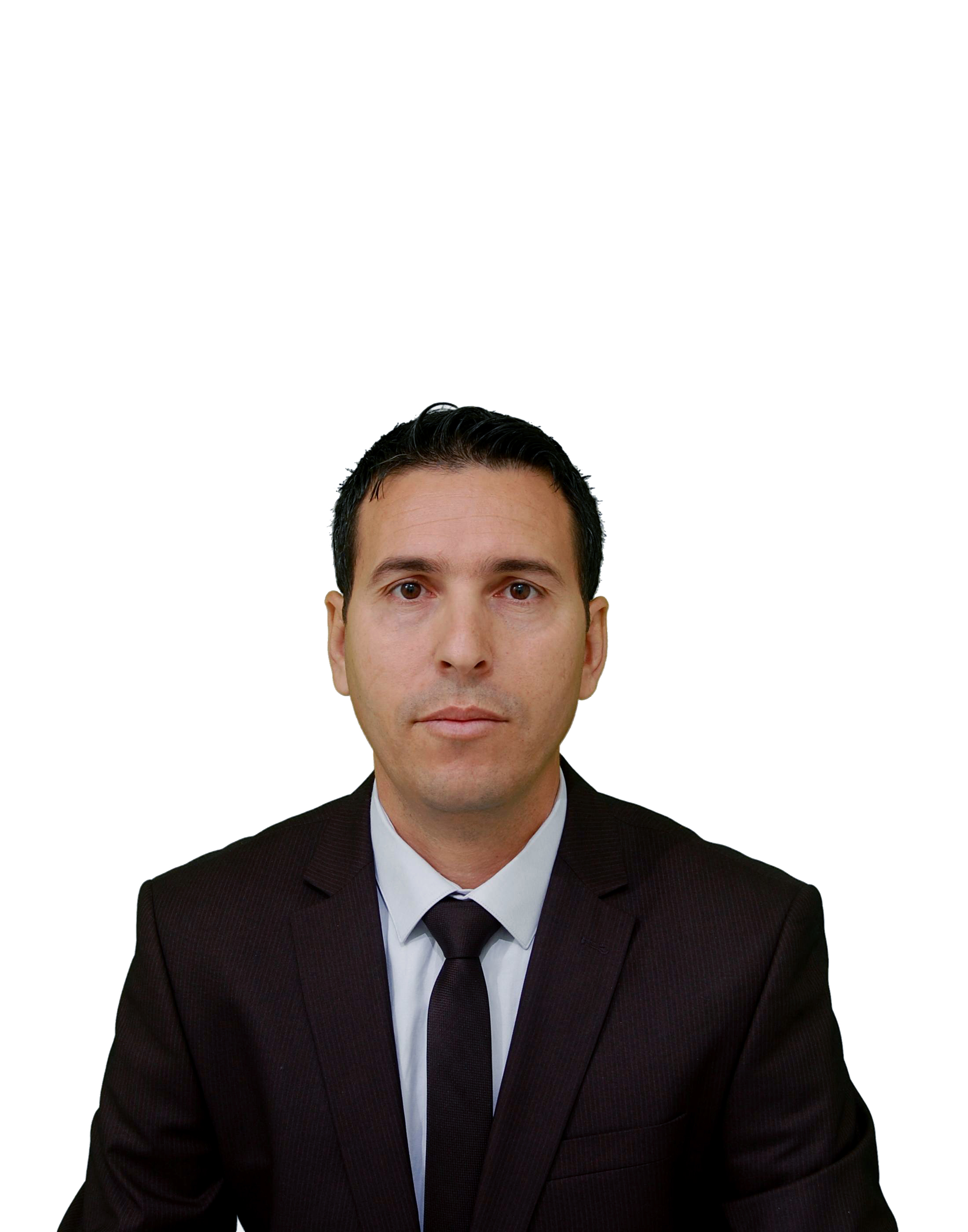
SALIM Dehimi
سليم دهيمي
salim.dehimi@univ-msila.dz
000000000
- City And Urbanism
- Institute of Urban Techniques Management
- Grade MCA
About Me
التاهيل الجامعي Habilitation universitaire. in جامعة المسيلة
Research Domains
Bio:Dr. Salim Dehimi (MCA) is a lecturer and researcher in City and Urbanism at Mohamed Boudiaf University of M’Sila, Algeria, specializing in Urban GIS, spatial analysis, geospatial modeling, remote sensing, urban planning, natural hazards, risk manageme Environmental Urbanism: Urban Environment, Natural Hazards, Urban Sociology. Geospatial Technologies: GIS (Geographic Information Systems), Cartography, Topography. Urban Planning & Design: City and Region, Urban Engineering, Architecture, Urban Transport. Risk Management: Natural Hazards in Urban Areas, Environmental Planning.
LocationMsila, Msila
Msila, ALGERIA
Code RFIDE- 2025
-
Licence
موساوي, عبد الصمد , ميهوبي, عباس
إعادة تهيئة مخطط شغل الأراضي رقم 17 بمدينة سيدي عيسى
- 2025
-
Licence
وحبيب, عبد الرحيم , م بوعلام الله, عماد
تهيئة المساحة الترفيهية لتحسين جودة الحياة في مخطط شغل الأراضي 07
- 2025
- 02-12-2021
-
التاهيل الجامعي Habilitation universitaire
التاهيل الجامعي Habilitation universitaire - 20-08-2020
- 07-06-2014
- 1985-01-15 00:00:00
-
SALIM Dehimi birthday
- 2025-12-25
-
2025-12-25
La couverture végétale; facteur améliorant la résilience des villes au risque d'inondation.
Résumé Cet article de recherche examine le rôle essentiel de la couverture végétale en tant que mécanisme vital et efficace au sein des stratégies d'urbanisme durable modernes. L'objectif est de relever les défis posés par les aléas naturels, et plus spécifiquement le phénomène récurrent des inondations dans les environnements urbains. l'intégration d'espaces verts, incluant les parcs publics, les arbres d'alignement, les toits et façades végétalisés, n'est pas uniquement un ajout esthétique ou récréatif pour la ville. Il s'agit d'un outil d'ingénierie environnementale fondamental qui opère efficacement à plusieurs niveaux pour atténuer les effets des crues : Augmentation de l'infiltration : Les systèmes racinaires, le sol et les plantes aident à absorber de grandes quantités d'eau de pluie en surface. Ralentissement du ruissellement : La végétation agit comme des barrières naturelles qui ralentissent la vitesse d'écoulement de l'eau, réduisant ainsi la force destructrice de l'inondation. Réduction de la charge : Ces solutions fondées sur la nature allègent la pression immense sur les réseaux d'assainissement traditionnels et l'infrastructure de la ville durant les fortes averses. Renforcement de la résilience : Ces approches écologiques augmentent la capacité de la ville à résister et à récupérer plus rapidement après un événement d'inondation dévastateur. La finalité de la recherche est de confirmer que l'investissement judicieux dans la couverture végétale est un investissement crucial dans la durabilité urbaine à long terme et la sécurité publique des communautés exposées à de tels dangers. Voulez-vous que je recherche des informations sur les résultats ou les recommandations spécifiques présentées dans cet article ?
Citation
SALIM Dehimi , LAHCENE Hadj hafsi , ,(2025-12-25), La couverture végétale; facteur améliorant la résilience des villes au risque d'inondation.,First national Seminar " Resilient city and natural hazards" (VRAN 2025),المنظم: قسم الهندسة المعمارية، كلية العلوم والتكنولوجيا، جامعة 8 ماي 1945 بقالمة، الجزائر Guelma, Algeria
- 2025-09-13
-
2025-09-13
Landslide susceptibility mapping using analytic hierarchy process: a case study of beni ilmane landslide in m'sila province, Algeria.
Landslides are ranked among the most significant global calamities. This study delves into the challenges linked to ground movements in the Beni Ilmane region, situated in the Msila district of central-eastern Algeria. By utilizing the qualitative multi-criteria analysis method known as the "Analytic Hierarchy Process" (AHP) alongside a Geographic Information System (GIS), the factors influencing susceptibility to land movement, primarily derived from remotely sensed satellite images, were prioritized using pairwise comparison. The validity and accuracy of the resulting zoning map were rigorously examined and tested by collecting data on identified land movements. The area under the sensitivity/specificity curve (AUC), also referred to as the receiver operating characteristic (ROC), was employed to quantify and assess the model used in this study. The mapping results clearly highlight areas vulnerable to the risks associated with ground movements. Furthermore, the outcomes of this study could serve as a valuable decision-making tool for the effective management of local development plans.
Citation
SALIM Dehimi , , (2025-09-13), Landslide susceptibility mapping using analytic hierarchy process: a case study of beni ilmane landslide in m'sila province, Algeria., Studies in Engineering and Exact Sciences 5.2 (2024): e7721-e7721., Vol:5, Issue:2, pages:e7721-e7721., 2764-0981
- 2025-03-31
-
2025-03-31
Assessment and mapping of areas at risk of flooding using a combined AHP and GIS multi-criteria analysis model ‒ case study of Sidi Aissa city (Algeria)
Floods are among the most hazardous natural disasters, which pose significant threats to human lifeat both global and national scales due to severe human, material, and environmental losses. The increasing frequency of floods, compared to other natural hazards, highlights the urgent need of their evaluation and the mitigation of their impacts. This study aimed to assess and map flood-prone areas in the city of Sidi Aissa, Algeria, using the analytical hierarchy process (AHP) and geographic information systems (GIS). The city was chosen because of the three rivers running through it. A model combining a multi-criteria statistical approach and GIS was employed. The study focused on analyzing the factors influencing flood occurrence, including land use, elevation, slope, drainage density, distance from river and roads, topographic wetness index (T.W.I), and normalized difference vegetation index (N.D.V.I), To calculate the weights of these factors in the GIS environment, the AHP method was applied, resulting in maps specific to each criterion. The results revealed that land use (21.7%) and distance from river (18.2%) are the most critical factors influencing flood susceptibility and damage to nearby buildings. The study shaped a flood susceptibility map divided into three categories: areas with very low flood susceptibility, accounting for 29% of the total area; areas with moderate flood susceptibility, accounting for 40% and areas highly susceptible to flooding, making up 31%. Furthermore, the study demonstrated the effectiveness of using AHP and GIS in simulating potential floods and identifying flood-pro
Citation
SALIM Dehimi , , (2025-03-31), Assessment and mapping of areas at risk of flooding using a combined AHP and GIS multi-criteria analysis model ‒ case study of Sidi Aissa city (Algeria), Geomatics, Landmanagement and Landscape, Vol:1, Issue:1, pages:19–41, Publishing House of the University of Agriculture in Krakow
- 2024-07-31
-
2024-07-31
Creating of urban spaces: between legislation and application. A case study of land use plan N°06 in the city of Batna
The illegal and disorderly practices committed by the IUC (inhabitants/users/citizens) have introduced chaos into urban spaces at different levels. The aim of this study is to examine how the practices do not comply with urban legislation impact urban spaces. It applies a socio-spatial analysis using three methodologies: the first is a social survey through questionnaires, the second is a field survey of the area studied, and the third is a spatial configuration modeling using space syntax analyses. The results show the dysfunctionalities caused by the unplanned interventions of IUCs within the study area, specifically land use plan N°06 in the city of Batna. Disobeying urban planning principles leads to compromised accessibility and visibility according to spatial syntax measures. Additionally, the results of the questionnaire and the survey highlight the inadequacy of legislation without effective enforcement mechanisms. Furthermore, the study contrasts the findings of field survey with spatial configuration analyses, indicating the disadvantages of the created urban space.
Citation
SALIM Dehimi , , (2024-07-31), Creating of urban spaces: between legislation and application. A case study of land use plan N°06 in the city of Batna, Geomatics, Landmanagement and Landscape, Vol:2, Issue:2, pages:125--139, 2300-1496
- 2024-01-25
-
2024-01-25
Évaluation et cartographie des zones vulnérables aux risques d'inondation à l'aide d'un modèle d'analyse multicritères combiné de AHP et SIG - cas d’étude de la ville de Sidi Aissa (Algérie)
Les inondations en Algérie se définissent aujourd’hui comme étant un phénomène naturel fréquent induisant des dégâts matériels et humains souvent catastrophiques, causés essentiellement par le débordement des lits majeurs des oueds. Les événements pluvieux de Bab El oued en 2001, de Skikda en 2004 et récemment celles de M'sila en 2007 et de Ghardaïa en 2008, ont causé des crues dévastatrices sont des preuves alarmantes. Plusieurs inondations catastrophiques ont été recensées dans notre zone d’étude (SIDI AISSA), notamment en 1982, 1992, 2001, 2011 et 2016. Cette étude vise à fournir une expertise pour la préparation d'une cartographie des inondations et l'estimation des risques d'inondation dans les zones urbaines en croissance. Pour modéliser et prédire l'ampleur des zones à risque d'inondation, un processus intégré de hiérarchie analytique (AHP) et des techniques d'analyse du système d'information géographique (SIG) sont utilisés pour le cas la ville de Sidi Aissa.
Citation
ALI Redjem , MOHAMMED Benhalima , SALIM Dehimi , ,(2024-01-25), Évaluation et cartographie des zones vulnérables aux risques d'inondation à l'aide d'un modèle d'analyse multicritères combiné de AHP et SIG - cas d’étude de la ville de Sidi Aissa (Algérie),VIIIème Colloque de l’Association francophone de Géographie physique (AFGP),Avignon, France
- 2023-08-05
-
2023-08-05
The deterioration of residential neighborhoods and the challenges of developing them in Algerian cities. A case study of a neighborhood of 600 dwellings in the city of M’sila
Urban planning demands that the needs and problems resulting from the dynamics of society and its development should be taken into account, relying on the studies that consider the reality of the city and the factors influencing its daily life, so it can perform its function under favorable circumstances for a better future within the context of durable development. It should be remembered that the first imbalances of the urban space are those that followed the industrial revolution and the doctrines and intellectual trends. However, the modern trend in architecture and urbanization in terms of urban space is the most influential. Urban space becomes a scene of symbolic confrontations between the designer (imposed plans) and the users of space. This situation appears clearly in the deterioration of the urban space giving a significant transfer of a denial, because of its incompatibility with the needs of the population. The Algerian city has experienced, particularly after the independence, the same situation despite the diversity of cultural and cultural heritage because of several factors, including rapid urban growth. These factors marked the course of the reconstruction and thus the urban structure of the Algerian cities, which urged the search for solutions, hastily put in place, to this evolution which led to changes in the society, testifying a blatant failure to reach the ambitions of users when they were excluded during all stages of the urban project. This is why urban space is considered as consumer goods within the user's reach, although it should be considered as a process rather than a product. Our research work is axed on the inadequacy of the productive environment (living environment or urban space) in the city of M'sila and on the way of life of the population that uses this space for its needs and aspirations, which are expressed through unjustified user interventions in the perspective of adapting space to their way of life. The point is to focus on the user and his participation in the creation of a durable and suitable urban environment. Allal, A., Dehimi, S., Bediar, A., & Benaissa, F. T. (2023). The deterioration of residential neighborhoods and the challenges of developing them in Algerian cities. A case study of a neighborhood of 600 dwellings in the city of M’sila. Technium Social Sciences Journal, 39(1), 799–811. https://doi.org/10.47577/tssj.v39i1.8242
Citation
SALIM Dehimi , , (2023-08-05), The deterioration of residential neighborhoods and the challenges of developing them in Algerian cities. A case study of a neighborhood of 600 dwellings in the city of M’sila, Technium Social Sciences Journal, Vol:39, Issue:1, pages:799–811, Technium Social Sciences
- 2023-08-02
-
2023-08-02
Effect of choosing a variogram model to predict salinity and its impact on the environment and geotechnical structures
Various disciplines, engineering, humanities, and other sciences require interpolating many parameters. Geostatistics, with its structural analysis step, is widely used for this purpose. Variography is the valuable step used to assess the correlation and dependence of the data. However, the wrong choice of the variogram model encounter all the predictive attended results. This article illustrates how the use of inappropriate variogram models can seriously conduct to a misleading of predicted results for such analysis. The influence of the selection of the semi-variogram model is highlighted and illustrated by thematic maps developed using three different models (Gaussian, spherical and exponential). To avoid such a drawback, a methodical approach to select the most suitable model, based on the calculation and analysis of the mean error (ME), the mean square error (MSE), the root of the square error mean (REQM …
Citation
SALIM Dehimi , , (2023-08-02), Effect of choosing a variogram model to predict salinity and its impact on the environment and geotechnical structures, Technium Social Sciences Journal, Vol:39, Issue:1, pages:860, Technium Social Sciences
- 2023-07-01
-
2023-07-01
A GIS-based multi-criteria evaluation of landfill site selection in the region of Hodna, Algeria
In Algeria, solid waste management (SWM) is considered a major problem; most of this waste is dumped in landfills without any control. The Algerian authorities have developed a national strategy for the integrated management of urban solid waste by 2035 by working on the implementation, development and equipping of technical landfill centers (TLC). Therefore, the aim of this study was to help local authorities in choosing the optimal locations for the completion of the proposed TLC between municipalities. This research used a combination of the multi-criteria decision aid (MCDA) and geographic information systems (GIS). It combines two aggregation methods: Linear Combination of Weights (WCL) and Criteria Weighting. The analytical hierarchy process (AHP) pair-wise comparison method was applied for assigning weights to the 11 criteria that were divided into environmental, social, and economic criteria according to previous studies in the field and the characteristics of the HODNA area. The results showed that 22.56% is the most suitable location for a landfill site, especially on the southeastern side, while 20.70% was suitable and 18.40% was moderately suitable. Finally, the process of assessing the spatial suitability of public emptying sites based on the results obtained in the final digital map,4.76% of the landfill sites are located in inappropriate areas, 14.29% are located in less suitable areas, 33.33% are located in suitable areas, 33.33% are located in moderately suitable areas and 14.29% are located in very suitable areas.
Citation
SALIM Dehimi , , (2023-07-01), A GIS-based multi-criteria evaluation of landfill site selection in the region of Hodna, Algeria, Journal of Degraded & Mining Lands Management, Vol:10, Issue:4, pages:4709–4720., Brawijaya University
- 2023-05-03
-
2023-05-03
النمذجة المكانية للتوسع العمراني دراسة حالة مدينة المسيلة
تتوسع المدن بشكل يفوق في كثير من الاحيان عملية التخطيط ، مما ينجر عنه توسع في اراضي غير ملائمة تتسبب في كثير من المشاكل للتجمعات المتاخمة لها ، تهدف هذه الدراسة الى صناعة نموذج محاكاة لصناع القراركأسلوب للتعامل مع التوسعات الحاصلة في مدينة المسيلة لاختيار احسن مواقع التوسع العمراني، و ذلك باستعمال نظم المعلومات الجغرافية و التسلسل الهرمي التحليلي ، بالاعتماد على مجموعة من المؤشرات بناءا على المسافة ، و قد كشفت لنا الدراسة ان مجموع المناطق الملائمة للتوسع في مدينة المسيلة تصل نسبتها الى % 80.75بينما المناطق غير الملائمة تصل نسبتها % 19.25و هي معظمها اراضي زراعية ، لذا فان تطبيق هذه التقنيات تساعد على ضبط التوسع العمراني من جهة و حماية الاراضي الزراعية من جهة أخرى
Citation
SALIM Dehimi , AHMED ALLAL , Adel BEDIAR , ,(2023-05-03), النمذجة المكانية للتوسع العمراني دراسة حالة مدينة المسيلة,العـمـارة والـعـمــران المـســــتدام فــي المــناطـــــق الجافــة وشبـــه الجافــــة واقـــــع وتحديــــات,جامعة عمار ثليجي الاغواط كلية الهندسة المدنية والهندسة المعمارية قسم الهندسة المعمارية
- 2023-05-03
-
2023-05-03
تحديات التنمية الحضرية والتوازنات الجهوية لمنطقة الهضاب العليا
عرفت الجزائر خلال الثلاثة عقود الاخيرة تحولا في مجال العمران ، انتقلت فيه من جزائر ريفية الى جزائر حضرية، في ظاهرة شملت دول العالم خاصة في القرن الواحد والعشرين، فقد جاء ضمن مؤشر الامم المتحدة المتعلق بالمدن والمستوطنات البشرية . الى أنه "نسبة سكان الحضر في العالم ستصل الى ( )%70بحلول عام ،2050وهذا تحت تأثير جملة من العوامل والحقوق المستحدثة على غرار الحق في المدينة" (بن عمارة ، .)2019 وصلت نسبة التحضر في الجزائر الى ()%68حسب احصائيات ، 2018بحيث أن()%70من سكانها أصبحوا يعيشون في المدن مقابل( ) %30يعيشون في الريف ، مع وجود اختلال كبير في توزيع الكثافة السكانية حيث أن( )%63 من السكان يتجمعون في الشمال على مساحة تمثل( )% 04من الاقليم الوطني و( )%28في الهضاب العليا على مساحة ( ، )%09و( ) %09من سكان الجنوب يتمركزون في مساحة تمثل:( .) % 87وعليه فان التحول الحضري الذي شهدته الجزائر والتدهور في المستوى المعيشي ونوعية الحياة الحضرية المقابل لهذا التحول ، وعلى هذا الاساس حاول المشرع الجزائري الارتقاء بالتنمية الحضرية من خلال قوانين العمران ، عن طريق وضع سياسة عمرانية تتماشى مع سرعة التحضر من جهة وتحقق جودة الحياة الحضرية . كما يمكن القول أن الجزائر بادرت مند السنوات الأولى للاستقلال في إعادة تنظيم المجال العمراني والحضري لمدنها، من خلال جملة من الادوات والقوانين، بالاعتماد على المصالح والهيئات التقنية التابعة للدولة (المنشأة حديثا أو تلك الموروثة عن الاستعمار) ، في محاولة منها لتلبية حاجيات السكان المتزايدة ، موازاة مع بعث التنمية الإقتصادية والإجتماعية للبلاد عبر أقاليمها المختلفة
Citation
SALIM Dehimi , AHMED ALLAL , Adel BEDIAR , ,(2023-05-03), تحديات التنمية الحضرية والتوازنات الجهوية لمنطقة الهضاب العليا,العـمـارة والـعـمــران المـســــتدام فــي المــناطـــــق الجافــة وشبـــه الجافــــة واقـــــع وتحديــــات,جامعة عمار ثليجي الاغواط كلية الهندسة المدنية والهندسة المعمارية قسم الهندسة المعمارية
- 2023-01-12
-
2023-01-12
Effect of choosing a variogram model to predict salinity and its impact on the environment and geotechnical structures
Various disciplines, engineering, humanities, and other sciences require interpolating many parameters. Geostatistics, with its structural analysis step, is widely used for this purpose. Variography is the valuable step used to assess the correlation and dependence of the data. However, the wrong choice of the variogram model encounter all the predictive attended results. This article illustrates how the use of inappropriate variogram models can seriously conduct to a misleading of predicted results for such analysis. The influence of the selection of the semi-variogram model is highlighted and illustrated by thematic maps developed using three different models (Gaussian, spherical and exponential). To avoid such a drawback, a methodical approach to select the most suitable model, based on the calculation and analysis of the mean error (ME), the mean square error (MSE), the root of the square error mean (REQM), mean standard error (ESM) and root of mean standard error (REQSM), is proposed in the present research study. Such contribution could reduce the negative effects of the choice of variogram model on the interpolation operation using the kriging technique.
Citation
SALIM Dehimi , Ahmed SEDDIKI , , (2023-01-12), Effect of choosing a variogram model to predict salinity and its impact on the environment and geotechnical structures, Technium Social Sciences Journal, Vol:39, Issue:1, pages:860-872, Technium Social Sciences Journal
- 2022-07-22
-
2022-07-22
The spatial modeling of urban expansion. Case study Msila
Understanding, analysis, monitoring and modelling of urban growth evolution as a major driving force of land use, especially in developed countries, is of great importance for land managers in the process of development. This research aims to analyse the spatial modelling of urban expansion using modern technologies - Delphi and Analytic Hierarchy Process (D-AHP) hybrid model and Geographic Information System (GIS) technique for Land-Use Assessment. These techniques are used to detect the most suitable and unsuitable areas in the Msila zone. By engaging residents and experts to choose criteria for analysing urban expansion, the study showed that 80.75% of total area represent suitable lands for expansion and around 19% represent unsuitable lands. By reading the results of the study, it is clear that the total suitable lands are located in the southwestern side of the city.
Citation
SALIM Dehimi , , (2022-07-22), The spatial modeling of urban expansion. Case study Msila, Glasnik Srpskog geografskog drustva, Vol:102, Issue:1, pages:171-186, Serbian Geographical Society
- 2022-07-01
-
2022-07-01
Geospatial modelling of the future urban expansion map using AHP and GIS in Bordj Bou Arreridj, Algeria
The study aimed to determine the areas of future urban expansion in Bordj Bou Arreridj, Algeria, by using multi-criteria analysis for decision-making. First, the future population was estimated to calculate the area we would need for the horizon of 2041AD. Second, criteria that contribute to determining the best areas for future expansion were selected based on recent research literature. Six factors were adopted: (industrial areas, agricultural lands, urban areas, road network, slopes, and hydrographic network). Third, the analytic hierarchy process (AHP) was used to make a comparison of the previous standards and to extract the weights. Fourth, translating the results obtained in the (QGIS) program and extracting a digital map showing areas suitable for future urban expansion according to three classifications (high spatial suitability, acceptable, and low). The results showed that the areas with high spatial suitability it densely distributed in the northeastern and western directions with an area of 12.42 km² or 23%. It is considered an insufficient area to meet the future need of 2041 AD, which amounted to 14.20 km². Followed by areas with acceptable suitability distributed in four geographical directions, occupying an area of 15.67 km² or 35%, which is a sufficient area and can be placed as a balance to fill the deficit. While the areas with low suitability densely distributed in the east-west sides, with an area of 16.26 km² or 37%. The research proved that the integration between (AHP) and (GIS) technologies have an important role in helping decision-makers identify suitable areas for future expansion, reduce the problems of random urbanization and create a homogeneous sustainable environment. Urban development in the future.
Citation
SALIM Dehimi , , (2022-07-01), Geospatial modelling of the future urban expansion map using AHP and GIS in Bordj Bou Arreridj, Algeria, Journal of Degraded & Mining Lands Management, Vol:9, Issue:4, pages:3733-3743, Brawijaya University
- 2022-07-01
-
2022-07-01
ACTA GEOGRAPHICA UNIVERSITATIS COMENIANAE
Abstract: Cities are witnessing urban inequality in developing countries, and this is reflectedin inadequate urban planning, because these spatial and socio-economic disparities translateinto spatial systems, an unsustainable urban form, and a low quality of life (QOL). The studytried to propose an approach to urban development, based on the concept of standard of living,where we worked to evaluate the quality of urban life based on indicators identified usingDelphi method. The map of the QOL of the city was extracted before upgrading in the envi-ronment systems geographical information. During the results of this map, we worked toidentify weaknesses in the distribution of evaluation indicators and then worked to improvetheir distribution and increase the numerical shortage in them spatially according to the needsof the population in the near term, then we reassessed the QOL after the upgrading process.The results obtained showed a significant development of the study area by a large percentageof the study area as a difference between the two phases, the scenario of development in thelevel of life according to the criteria adopted in our research with population participationproved a qualitative shift in the level of well-being of the local population spatially. A modelhas been developed as a comprehensive tool for assessing urban areas in the pursuit of the sus-tainability of neighborhoods in developing countries. Keywords: upgrading, population well-being, Delphi method, GIS, urban areas, M’sila
Citation
SALIM Dehimi , , (2022-07-01), ACTA GEOGRAPHICA UNIVERSITATIS COMENIANAE, ACTA GEOGRAPHICA UNIVERSITATIS COMENIANAE, Vol:66, Issue:1, pages:25-46, Comenius University in Bratislava
- 2022-06-25
-
2022-06-25
Green spaces between water shortage and greed for urban sprawl, supported by fierce speculation: case study, the City of M'sila
Water and green spaces have an existential, sometimes conflicting, relationship with urban sprawl, especially in regions with arid climates. Both are important elements of the urban composition that provide psychological and sanitary comfort and are economically, socially, and ecologically necessary for the population. By green space, we mean fruit trees and the cultivation of cereals and vegetables, which represent the main economic resource for the majority of the population of the city of M'sila. Our research aims to highlight the impact of the drop-in water from the Ksob dam. The only source of irrigation for climatic and management reasons, on the degradation of green spaces and their transformation into bare land without economic value, then into nurseries for urban planning. The consequences of the directives of the urban planning master plan (PUD 1976) are certainly catastrophic; water, demography, urban planning, and the future of the agro-pastoral vocation and green spaces of the city of M'sila. The data available and the technique used allowed us to include the period from 2017 to 2021. The numerical data shows the upward curve of urban expansion from 3,401.67 hectares to 3,969.28 hectares, the reduction of green spaces from 7,732.68 hectares to 3,802.77 hectares in just five years. There is similar trend for water which is reduced from 30 million m3 in 1972 to 3 million m3 in 2021, ten times less in 40 years. These figures reflect the seriousness of situation.
Citation
SALIM Dehimi , , (2022-06-25), Green spaces between water shortage and greed for urban sprawl, supported by fierce speculation: case study, the City of M'sila, Glasnik Srpskog geografskog drustva, Vol:102, Issue:2, pages:266,2022, Serbian Geographical Society
- 2022-04-13
-
2022-04-13
Using GIS combined with AHP for mapping landslide susceptibility in Mila
Due to the complexity of its structure and morphology, the soil in the Mila area has experienced numerous landslides; damaging the road network and other supporting infrastructure. First, the most important landslide types were inventoried and mapped using existing data. The objective of this study is to develop a model based on the AHP analytical hierarchy process and integrate cartographic data into a GIS geographic information system for identifying and mapping regional landslide susceptibility. The approach uses factors such as slope, lithology, land use, road location, fault, flow and drainage network density as the main criteria to control the occurrence of selected landslides. The results showed that 15% of ground movement occurred in areas of high to very high susceptibility, 55% in areas of moderate susceptibility, and 30% in areas of very low to low susceptibility. The resulting map is subsequently validated by comparing the location of the mapped landslides with the susceptibility classes. The analysis of the results of this study shows that the landslide vulnerability map is a powerful decision support tool for local community development plans in the Algerian municipality of Mila.
Citation
SALIM Dehimi , , (2022-04-13), Using GIS combined with AHP for mapping landslide susceptibility in Mila, International Journal of Design & Nature and Ecodynamics, Vol:172, Issue:2, pages:169-175, International Information and Engineering Technology Association
- 2022-03-17
-
2022-03-17
Evaluation of the efficiency and quality of the tram route of Setif city, Algeria: Combining AHP and GIS approaches
The study aims to evaluate the efficiency of the tram track in the urban transport system of the Algerian city of Setif by combining Analytical Hierarchy Process (AHP) and Geographic Information System (GIS) approach. In this research, a set of multiple pre-determined criteria applicable in the field of urban transport were selected for decision-making. They were collected from recent research literature and expert opinions in this discipline, and then were arranged and evaluated in the AHP to extract the main weights for each criterion. In the end, they were processed spatially by using GIS. The study showed that the selection of the tramway track in the city of Setif was not successful in terms of the chosen location, and its selection was not studied according to the efficiency and quality criteria applicable in the field of urban transport. In addition, the study concluded that there is a significant shortfall in the first tram track, especially the one linking the tram route to the northern and southern parts of the city, which affected the efficiency and quality of the tram route. As the results have shown, the percentage of good spaces near the tram route does not exceed 0.34%. It is followed by the percentage of the average and acceptable areas (13.48%) and then the percentage of the marginalized areas and the areas far from the tram track (86.18% of the total area of the city). The study also demonstrated the importance of using AHP and GIS in evaluating a completed tram track according to a comprehensive and widely studied scientific methodology.
Citation
SALIM Dehimi , Bureau de la stratégie de numérisation , , (2022-03-17), Evaluation of the efficiency and quality of the tram route of Setif city, Algeria: Combining AHP and GIS approaches, Journal of the Geographical Institute Jovan Cvijić SASA, Vol:71, Issue:2, pages:85-102, Geographical Institute "Jovan Cviji" of the Serbian Academy of Sciences and Arts
- 2022-02-21
-
2022-02-21
The effect of spatial differences on the quality of urban life a comparative analytical study of three cities in the high plateaux region of Algeria
Abstract: The urban areas in Algeria suffer from several imbalances in different regions, where the inequality ofopportunities has led to an imbalance in the population density “from north to south”. And to the urban chaos, this mattermade it face many challenges, which prompted us to search for this defect. Development plans in Algeria focus on the role of cities with high hills in restoring balance to the national sphere and reducing these disparities. The study aims to extract and evaluate the spatial differences of the three cities and reveal the spatial disparities, in order to establish a balanced regional development, while preparing the various development plans, based on several criteria by integrating the Delphi method with the analytical hierarchy process, and determining its spatial regions in the (GIS) environment. Through a comparative study of three cities, the study showed the progress of the city of Setif, achieving (11%) of the study area, achieving high quality,with an area (14.50 km²), Al-M’sila (03%) with an area (7.99 km²). Barika (01%) with an area of (3.98 km2). The results canbe used during the preparation of development plans for this region.
Citation
SALIM Dehimi , , (2022-02-21), The effect of spatial differences on the quality of urban life a comparative analytical study of three cities in the high plateaux region of Algeria, Geo Journal of Tourism and Geosites, Vol:40, Issue:1, pages:181-190, Editura Universitatii din Oradea
- 2021-10-05
-
2021-10-05
The use of new techniques in spatial modeling and analysis of urban quality of life: Multiple-criteria decision analysis and GIS
The research aims to analyze and evaluate the quality of urban life using modern technologies by engaging residents and experts to choose criteria for analyzing and evaluating the quality of life (QoL)using multi-criteria analysis and a geographic information system to conduct spatial modeling to extract a Qol analysis and evaluation map and determine its geographical ranges. The study showed that (4.44%) represent a high QOL and (47.23%) represent an acceptable QOL and (48.33%) represent a low QOL. The study proved that there are geographical differences between the city center and the suburbs that can be spatially determined.
Citation
SALIM Dehimi , , (2021-10-05), The use of new techniques in spatial modeling and analysis of urban quality of life: Multiple-criteria decision analysis and GIS, GeoJournal of Tourism and Geosites, Vol:35, Issue:1, pages:355-363, Editura Universitatii din Oradea
- 2021-08-01
-
2021-08-01
Quantitative and qualitative assessment of urban green spaces in Boussaada City, Algeria using remote sensing techniques
A central issue for the Algerian city, in the dry environment, is awareness of the establishment and preservation of particular green spaces within the framework of sustainability. The overall goal of this study is to concentrate on the issues of green space provision in the city of Boussaada. Boussaada is a complex and fragile city with a rich history, archeological and natural diversity, and is under tremendous anthropogenic stress. The city of Boussaada has long had issues with the availability of green areas, a situation that is attributed, among other things, to a flawed urban design that places a premium on the environment. We attempted to define the quantity of green spaces in the city and quantify their richness through this study. The qualitative and quantitative study was carried out with the help of the normalized difference vegetation index (NDVI) and qualitative analysis and more specifically the species of trees in the new town of Boussaada.
Citation
SALIM Dehimi , , (2021-08-01), Quantitative and qualitative assessment of urban green spaces in Boussaada City, Algeria using remote sensing techniques, Journal of Geography and Regional Planning, Vol:14, Issue:3, pages:123-133, ACADEMIC JOURNALS
- 2019-12-03
-
2019-12-03
EVALUATING THE QUALITY OF LIFE IN URBAN AREA BY USING THE DELPHI METHOD. A CASE STUDY OF M'SILA CITY/ALGERIA
Studies and research on the quality of urban life are witnessing a renewed interest not only of the research community, but also through policies and attention in urban management and planning for the search of how to make cities more competitive and maintain the development and promotion of the population wellbeing. In this manuscript, we discuss how to assess the quality of urban life by integrating the Delphi method with one of the multi-criteria analysis techniques in decision-making, the process of hierarchical analysis is sequential (AHP). The city of M’Sila, Algeria, was selected as a case-study, where we proposed a set of criteria for assessing the quality of life in the city, engaging its actors using the Delphi method and selecting six factors (public services, education, environment, culture, recreation, health, security, and protection). The first stage, in the second phase, I use a sequential method of the AHP pyramid analysis, the third stage came to translate the results obtained in a GIS environment, to derive the quality of the life map. One of the most important results follows: (7%) of the study-area achieves: high-quality of life with space (3.77 km²), (9%) average quality of life with an area (4.70 km²) and (14%) moderate quality of life with an area (6.98 km²) and (19%) low quality of life with space (9.75 km²) and (51%). It achieved the least quality of life with an area (26.02 km²). Map results can be used to identify areas that need to be upgraded or to choose the best areas for accommodation.
Citation
SALIM Dehimi , Makhloufi HADJAB , , (2019-12-03), EVALUATING THE QUALITY OF LIFE IN URBAN AREA BY USING THE DELPHI METHOD. A CASE STUDY OF M'SILA CITY/ALGERIA, Revue Roumaine de Géographie, Vol:63, Issue:2, pages:193-202, Publishing House of the Romanian Academy