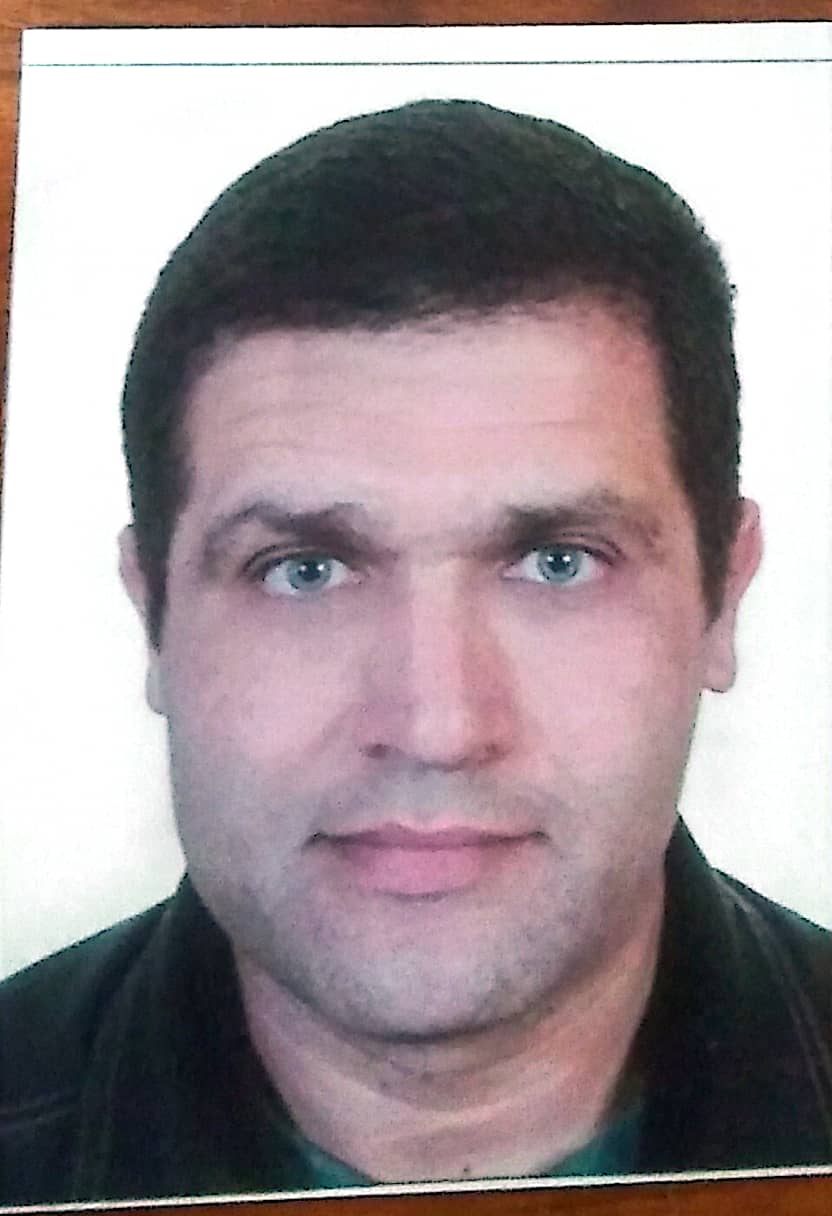
KHALED Mahdi
خالد مهدي
khaled.mahdi@univ-msila.dz
06 73 44 80 01
- Departement of Physics
- Faculty of Sciences
- Grade MCA
About Me
Doctorat en sciences en physique énergétique. in Université des frères Mentouri de Constantine 1
Research Domains
Physique énergétique & énergie renouvelables Energie solaire, énergie éolienne et énergie géothermique Simulation CFD- Gambit, Fluent6.3 Production et stockage d'Hydrogène bleu Sciences Météorologiques
LocationMsila, Msila
Msila, ALGERIA
Code RFIDE- 2025
-
Encaderement master
Boukharouba Akrem
Réaliser une cellule d’électrolyse alimentée par un panneau PV afin de produire l’hydrogène par l’eau de mer
- 2024
-
Encaderement master
LOUKRIZ TOUFIK
Design and Optimization of a Solar-Driven Autoclave System for Enhancing Sterilization Efficiency in Low-Resource Environment
- 2024
-
Encaderement master
BOUSSAFI Salah , BENYOUB Nacer
Installation de système de production d'hydrogène à l'aide d'un capteur photovoltaïque
- 2024
- 2024
-
Encaderement Co-Encaderement Decret 1275
بوراس أمال
تصميم، بناء وتشغيل نموذج للمدخنة الشمسية
- 2024
-
Encaderement Co-Encaderement Decret 1275
BOUSSAFI Salah , BENYOUB Nacer
Installation de système de production d'hydrogène à l'aide d'un capteur photovoltaïque
- 14-06-2015
-
Doctorat en sciences en physique énergétique
Production D’hydrogène Par Électrolyse Sous Chauffage Solaire Par Un Concentrateur Paraboloïdale - 09-03-2009
-
Magister en énergies renouvelables
Conception et réalisation d'un concentrateur sphérique - 03-07-2004
-
Ingénieur d'état en Météorologie
Approche expérimental des basses couches atmosphérique - 04-07-1998
- 1975-01-18 00:00:00
-
KHALED Mahdi birthday
- 2026-01-30
-
2026-01-30
Deep Learning for Statistical Downscaling of Daily Mean Temperature over Northwestern Algeria Using CMIP6 Data
Accurate and high-resolution regional climate projections are essential for effective water resource management and climate adaptation, particularly in semi-arid regions such as northwestern Algeria. In this study, we develop a region-specific deep learning framework based on a Convolutional Neural Network (CNN) to statistically downscale daily mean temperature using CMIP6 large-scale climate predictors. The framework incorporates carefully selected predictors, including topography, distance to the sea, and key synoptic-scale ERA5 variables, and employs a robust training strategy based on the Huber loss function to enhance stability in the presence of occasional extreme temperature values. Results demonstrate that even a relatively compact CNN consistently outperforms a baseline multiple linear regression model, with the regional explained variance (R2) increasing from 0.8407 to 0.9116, RMSE decreasing from 4.059 °C to 3.339 °C, and MAE reduced from 3.269 °C to 2.683 °C. These improvements highlight the CNN’s ability to capture physically coherent relationships between local physiographic factors and large-scale atmospheric predictors, producing a more accurate spatial representation of temperature variability. Additional diagnostics further confirm the robustness of the proposed framework in reproducing both mean climate characteristics and spatial error structures. Overall, the study demonstrates the potential of deep learning as a powerful and transferable tool for statistical climate downscaling over Algeria and similar climate-sensitive regions.
Citation
Khaled MAHDI , , (2026-01-30), Deep Learning for Statistical Downscaling of Daily Mean Temperature over Northwestern Algeria Using CMIP6 Data, Mathematics Open, Vol:5, Issue:, pages:23, World Scientific
- 2025-11-22
-
2025-11-22
Simulation of a Cooling System for a Bus terminal Under Three Different Climatic Conditions in Algeria
Bus stops play an essential role in a city’s transportation system. However, these semi-enclosed spaces often suffer from poor ventilation, excessive heat, and air pollution, making waiting uncomfortable and increasing health risks for passengers. In Algeria, the climate ranges from the humid Mediterranean coast to semi-arid high plateaus and hot desert regions, which necessitates the evaluation of ventilation systems adapted to each type of climate. The objective of this study is to use computational fluid dynamics (CFD) to simulate a ventilation system in a typical bus stop and to analyze airflow behavior, temperature variations, and pollutant dispersion under three different climatic conditions: Algiers (humid Mediterranean coast), M’Sila (semi-arid high plateau), and Ouargla (hot and arid desert).
Citation
Khaled MAHDI , ,(2025-11-22), Simulation of a Cooling System for a Bus terminal Under Three Different Climatic Conditions in Algeria,1st International Conference Climate-Change Resilient Transportation Infrastructure,Algiers -ALGERIA
- 2025-10-03
-
2025-10-03
CFD simulation and optimization of the efficiency of a spiral tube under concentrated radiation by a parabolic concentrator
This work aims to study and improve thermal efficiency of a parabolic dish collector (PDC) having a spiral tube heat receiver to produce hot water for several daily purposes. This study consists of two main steps. The first part contains the visual analysis of the parabolic center using the free SolTrace software. In the second part, we used the commercial Gambit software to create the geometry of a spiral tube with 0.01 m diameter and about 5 m length to study spiral tube. SolTrace software allows us to determine the appropriate focal area location for placing the spiral tube; by estimating the value of the concentrated radiation, the concentrated beam is represented as a Gaussian function whose distribution varies with the dimensions of the parabola, as well as with the intensity of the radiation coming from the sun. We employed solar radiation and concentrated beams as boundary conditions for the thermal model developed using Fluent software. Additionally, we wrote a user-defined function (UDF) in C++ to enable Fluent to compute the spatial distribution of the concentrated beam, which simulates a concentrated light energy source on the spiral tube. The key results obtained include the spatial distribution of the concentrated beam, the temperature field along the tube, and the mass flow velocity within the spiral tube in the turbulent regime. Multiple simulations were performed by varying the tube’s thickness while keeping the inner diameter constant in the first case. In the second case, we varied the inner diameter while maintaining a constant tube thickness and mass flow rate of the fluid. The results from both cases were compared and showed strong agreement with those reported in the literature, validating the model. It was found that an additional increase in the outer thickness of 4 mm for the same tube leads to a 5.88% increase in the average temperature of the outlet fluid and an 11.42% increase in the thermal efficiency. These simulations show that the PDC can operate efficiently under a variety of conditions and provide future insight for CSP design engineers.
Citation
Khaled MAHDI , , (2025-10-03), CFD simulation and optimization of the efficiency of a spiral tube under concentrated radiation by a parabolic concentrator, European Physical Journal Special Topics, Vol:232, Issue:1, pages:21, Springer-Verlag GmbH Germany, part of Springer Nature
- 2025-05-14
-
2025-05-14
Exact solutions of the (1+ 1)-dimensional nonlinear Schrdinger equation via a novel analytical approach
This study investigates the (1+1)-dimensional chiral nonlinear Schrödinger (NLS) equation, crucial in nuclear physics for modeling chiral soliton propagation. The Extended Direct Algebraic Method (EDAM) is employed to derive a diverse range of exact solutions, including periodic, solitary, dark, bright, mixed trigonometric, hyperbolic, and rational wave solutions. These solutions provide valuable insights into the complex behavior of chiral nonlinear systems. A sensitivity analysis assesses the impact of initial condition and parameter perturbations on solution stability, highlighting the robustness and reliability of the obtained solutions. The findings contribute significantly to understanding chiral NLS equations, with potential applications in Ultrafast signal routing systems, Optical communication, Nonlinear optics, Condensed matter physics. This research advances theoretical knowledge and provides a solid foundation for future studies on chiral nonlinear systems. The exact solutions obtained can be used to model and analyze complex phenomena in various fields, demonstrating the versatility and efficacy of the mEDAM technique.
Citation
Khaled MAHDI , , (2025-05-14), Exact solutions of the (1+ 1)-dimensional nonlinear Schrdinger equation via a novel analytical approach, Fractals, Vol:2540179, Issue:, pages:20, World Scientific Publishing Company
- 2025-04-27
-
2025-04-27
Numerical analysis of a spherical concentrator using SolTrace software
This study examined the impact of the geometric dimensions of the spherical concentrator, namely the diameter and length of the collector's cylindrical tube. We also examine the impact of optical aberration in the spherical reflector and the solar tracking system. We developed a model of the incident rays on a spherical mirror with an aperture of 2.8 m, a diameter of 3.23 m, and a focal length of 0.808 m. We used the free SolTrace software developed by NREL in the USA. The simulation findings demonstrated that augmenting the cylindrical length of the tube enhances the model's efficiency. Augmenting the diameter of the cylindrical tube of the collector enhances its efficiency when the concentration ratio exceeds 30; subsequent increases yield minimal impact on optical efficiency. The architecture of the examined collector preserves its elevated optical efficiency for optical deviations up to 0.2 degrees. A decline in efficiency is noted with the rise of optical errors. This study illustrates that the spherical solar concentrator functions efficiently across diverse climatic conditions and introduces novel concepts for this category of concentrators. Keywords: Spherical concentrator, SolTrace, optical efficiency, concentrated radiation, concentration ratio
Citation
Khaled MAHDI , ,(2025-04-27), Numerical analysis of a spherical concentrator using SolTrace software,1st International Conference on Engineering and Advanced Technologies,Institute of sciences and technology university of Mila-Algeria
- 2025-04-22
-
2025-04-22
Comparative study of spiral tube receivers with and without glass envelope for a parabolic dish collector
This study compares two receivers of a parabolic dish collector (PDC) with a diameter of 3.8 m. The first receiver is a coiled spiral tube exposed to air, and the second receiver is the same tube but covered with a transparent glass tube. The receivers are placed in the concentration area of the parabolic dish at a distance of 2.26 m. Our work is divided into two parts: In the first stage, we estimate the light radiation power by simulating the concentrated solar radiation processed by the free software SolTrace released by NREL, USA. In the second stage of the work, computational fluid dynamics (CFD) simulations are performed to analyze and optimize the thermal performance of the tube receiver. We can use the concentrated light radiation calculated by SolTrace as the boundary conditions for the heat flow on the bottom wall of the spiral tube. The upper half of the wall is exposed to natural sunlight. The effect of changing the outer glass tube's diameter on the PDC's thermal performance is studied. The performance of the spiral tube receiver is compared by simulation using FLUENT with a change in the diameter of the glass tube to the thermal efficiency of the proposed model while maintaining the same diameter of the metal tube through which the water-based nanofluid Water/Al2O3 passes. This work aims to provide an optimal design of a solar receiver with a low-cost and easy-to-implement technology that can be used in medium-temperature thermal processes, refrigeration, industrial processes, and multi-generation systems. Increasing the outlet temperature leads to an 18% increase in thermal efficiency for the first receiver.
Citation
Khaled MAHDI , ,(2025-04-22), Comparative study of spiral tube receivers with and without glass envelope for a parabolic dish collector,SÉMINAIRE INTERNATIONAL SUR L’ÉNERGÉTIQUE ET LES ÉNERGIES RENOUVELABLES – BATNA AVRIL 2025 SNEER-2024, 22 AVRIL, BATNA, ALGERIE,BATNA, ALGERIE
- 2025-03-19
-
2025-03-19
Asymptotic behaviour of nonlinear viscoelastic wave equations with boundary feedback
In this study, we investigate a nonlinear viscoelastic wave equationsubject to acoustic boundary conditions and a nonlinear distributeddelay feedback acting on the boundary. The asymptotic behaviourof solutions is analysed by considering a general kernel formulationand imposing suitable assumptions.
Citation
Khaled MAHDI , , (2025-03-19), Asymptotic behaviour of nonlinear viscoelastic wave equations with boundary feedback, Applied Mathematics in Science and Engineering, Vol:33, Issue:1, pages:19, Taylor & Francis
- 2024-10-16
-
2024-10-16
Computational approaches on integrating vaccination and treatment strategies in the SIR model using Galerkin time discretization scheme
In this manuscript, we carried out a thorough analysis of the general SIR model for epidemics. We broadened the model to include vaccination, treatment, and incidence rate. The vaccination rate is a testament to the alternatives made by individuals when it comes to receiving vaccinations and merging with the community of the recovered. The treatment rate measures how often people who have contracted a disease are able to transition into the recovered category. The continuous Galerkin-Petrov method, specifically the cGP(2)-method, is employed to calculate the numerical solutions of the models. The cGP(2)-method imperative to analyse two unknowns over every time interval. The unknowns can be determined by solving a block system of size (2 × 2). This approach demonstrates a strong level of precision throughout the entire time interval, with an impressive rate of convergence at the discrete time points. In addition, the article investigates the concept of the basic reproduction number (R0) and explores the intricacies of conducting sensitivity analysis of the developed system
Citation
Khaled MAHDI , , (2024-10-16), Computational approaches on integrating vaccination and treatment strategies in the SIR model using Galerkin time discretization scheme, Mathematical and Computer Modelling of Dynamical Systems, Vol:30, Issue:1, pages:34, Taylor and Francis Ltd
- 2024-03-12
-
2024-03-12
Numerical study and optimization of a conical autoclave receiver
In this article, we present a mathematical model applied to the concentration of solar energy. This system is designed to prepare steam to meet the sterilization needs of medical instruments. A conical concentrator coupled to an autoclave in cylindrical form is placed in the conical reflector axis. We present a mathematical model explaining the thermal behaviour of water in a medical autoclave. The validation of the model was well done with the literature results. Our results indicate that the system produces saturated steam and takes 20 to 30 min, depending on climatic conditions and autoclave dimensions. The sufficient time to reach a temperature of more than 121 ◦C where no organism reproduces after being kept in an autoclave at 126 ◦C for 6 min or at 121 ◦C for at least 20 min. The simulation results encourage us to optimize the concentrator device to obtain a useful solar sterilizer, using the theoretical model as a safe guide to achieve this.
Citation
Khaled MAHDI , , (2024-03-12), Numerical study and optimization of a conical autoclave receiver, Partial Differential Equations in Applied Mathematics, Vol:10, Issue:100659, pages:13, Elsevier
- 2023-12-19
-
2023-12-19
On a logarithmic wave equation with nonlinear dynamical boundary conditions: local existence and blow-up
This paper deals with a hyperbolic-type equation with a logarithmic source term and dynamic boundary condition. Given convenient initial data, we obtained the local existence of a weak solution. Local existence results of solutions are obtained using the Faedo-Galerkin method and the Schauder fixed-point theorem. Additionally, under suitable assumptions on initial data, the lower bound time of the blow-up result is investigated.
Citation
Khaled MAHDI , , (2023-12-19), On a logarithmic wave equation with nonlinear dynamical boundary conditions: local existence and blow-up, Journal of Inequalities and Applications, Vol:2023, Issue:159, pages:23, Springer International Publishing