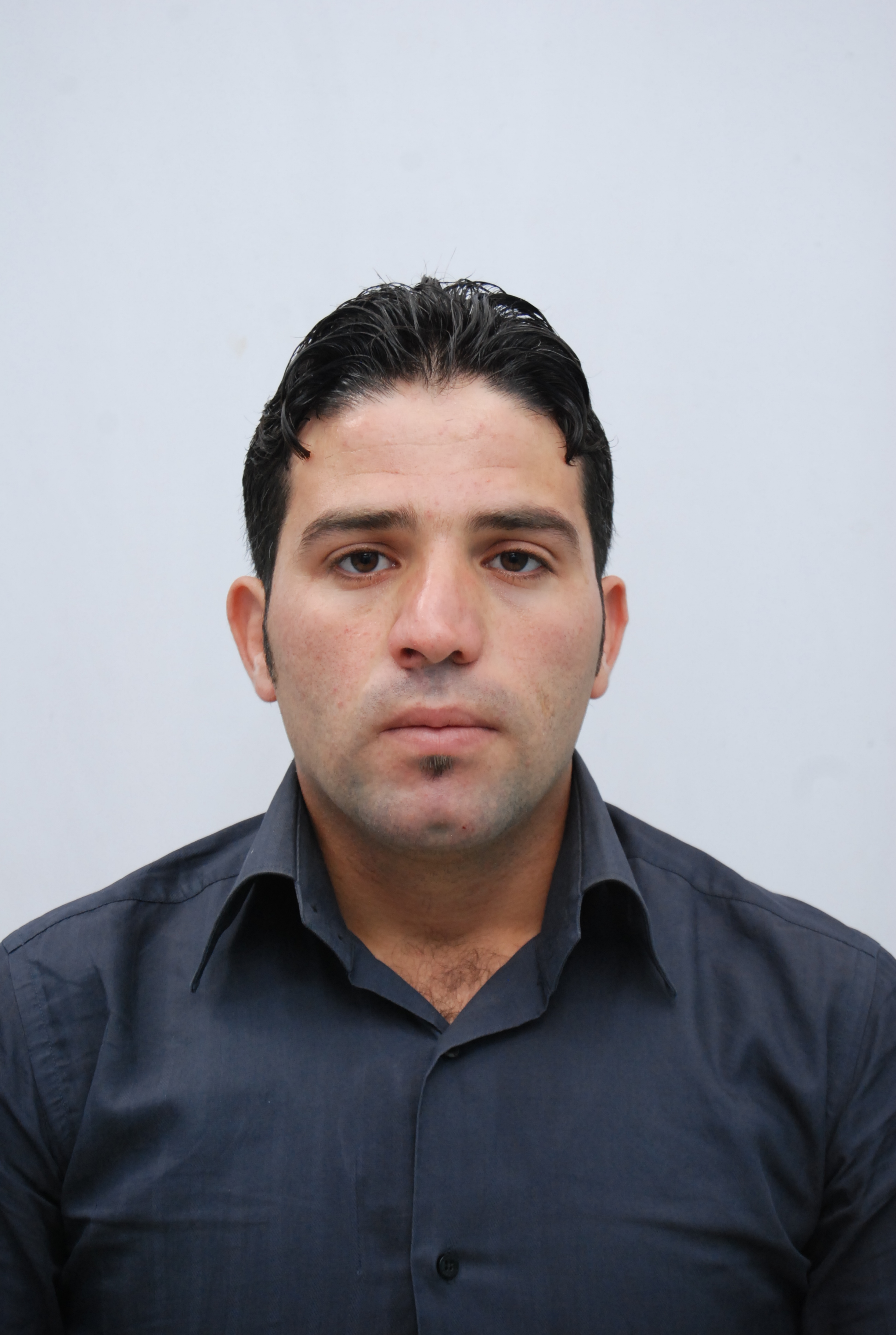
MOHAMMED Gouffi
قفي محمد
mohammed.gouffi@univ-msila.dz
06 62 91 48 34
- Department of Letters and English Language
- Faculty of Letters and Languages
- Grade MCA
About Me
Habilitation Universitaire. in Ministry of Higher Education and Scientific Research
Research Domains
Postcolonial Studies, Algerian, American, Afro-American and African Literatures and Civilizations, Comparative Literature, Translation Studies, Poetry, Cultural and Identity Studies, Historyto
LocationMsila, Msila
Msila, ALGERIA
Code RFIDE- 2025
-
Encaderement master
Mohammed HADJI
Big Tech, Media Collusion, and U.S. Foreign Policy: Shaping Global Narratives in the Post-9/11 Era: The Case of the Arab Spring in Egypt and Syria
- 2025
-
Encaderement master
Wissam DAHMANI
Reviving Memory and Reinventing Selfhood through Architecture in W. G. SEBALD's Austerlitz
- 2024
-
Encaderement master
Khitem BAKHTI , Meriem SELAMI
Politics of Womanhood and Poetics of Mothering in Stockett’s The Help
- 2024
-
Encaderement master
Yamina KORICHI , Israa Iness BENBACHIR
The Influence of Storytelling Tradition on the Algerian Arabic-language Novel in Ahlem Mosteghanemi’s The Bridges of Constantine
- 2024
-
Encaderement master
Boudjemaa BELGUELIEL , Lahcene SAHOUANE
Identity Contamination and Symptoms of subalternity in khadra's The Swallows of Kabul
- 2024
-
Encaderement master
Rachid BENDAKFAL , Abdellah HOUADAF
The Role of the American Diplomacy in Advancing the Normalization of Arabo-Israeli Relations
- 2024
-
Encaderement master
Boudjemaa HAMAD , Mohammed BEACEL
The Systematic Demonization of the Palestinian Resistance and Its Impact on the Libertarian Course of the Palestinian Cause
- 2023
-
Encaderement master
DJOUDI Amel , DJOUDI Amel KIROUANI Essya
Trump’s Legislative Policies and Their Impact on Afro-Americans’ Socio-economic Conditions
- 2023
-
Encaderement master
Ms. Sara SAOUDI , Ms. Meriem SLIMANI
Gender Disparities And Stereotypes Oppositions in Italo Calvino’s If On A Winter’s Night A Traveller
- 2022
-
Encaderement master
Miss. Amel SEDID , Miss. Boutheyna TURKI
“Two Worlds that Do not Meet:” Re-assessing The Tendency of Devotion toward Civilization in The Girl in The Tangerine Scarf
- 2022
-
Encaderement master
Miss Souaad IBRIR , Miss Sara BEN ZIANE
Mapping the Self and Uncanny in Cormac McCarthy's The Road
- 2022
-
Encaderement master
Chahrazad KHALDAOUI , Imane HEBACHE
Sing for Freedom: The African American Song as a Weapon in Emancipating Cultural Identity in the American Civil Rights Movement
- 2021
-
Encaderement master
Mr. Mohamed Elamine RABIA
Plotting Eastern Women Multiple Colonization: A Comparative Study between Khaled Hossieni’s A Thousand Splendid Suns and Assia Djebar’s Fantasia, an Algerian Cavalcade
- 2021
-
Encaderement master
Mrs. Zeyneb MIMOUNE
Utopian Dream and Dystopian Reality: An Analysis of Gibran Khalil’s The Prophet
- 2020
-
Encaderement master
Abde Ssamede Ben Yahia , Rayane Fichouche
Caught Between Two Worlds: Clash of Civilizations in Salih’s Season of Migration to the North
- 2019
-
Encaderement master
Ahmed DEBDOUCHE , Zina MILOUDI
The Revolutionary Discourse in Freneau and Zakaria’s Selected Poems
- 2019
-
Encaderement master
Abir BELKHIRI , Ahlam MEKHALFIA
Lethal Crossings and Shaping the African Dream in Laila Lalami’s Hope and Other Dangerous Pursuits
- 2018
-
Encaderement master
Hadjer SAADI , Zahra KOUDRI
Historical Trauma and New Women Status in Margaret Mitchell’s Gone with the Wind
- 2018
- 2018
-
Encaderement master
Imane NASRI , Rima SAADAOUI
Poetics of Pain through Kurt Vonnegut’s Slaughter House Five.
- 2017
-
Encaderement master
Khaoula BELABBES , Sabrina TARFAYA
The Struggles of Veiled Muslim Women through Mohja Kahf’s The Girl in the Tangerine Scarf
- 2017
-
Encaderement master
Abir KHELIFI , Ibtissam TOUATI
Bella’s Stereotyped Role through Stephanie Meyer’s Twilight
- 2017
-
Encaderement master
Meryem GANA , Ahlam SOUAADIA
United Nations Security Council’s Double Standards Case Study: Sabra and Shatila Massacre 1982 and Darfur Crisis 2003
- 2016
-
Encaderement master
Mss Asma CHADDADI
Willy’s Perception of the Success Myth Notion and The Quest for a Self-hood: A Freudian Study of Arthur Miller’s Death of a Salesman
- 2016
-
Encaderement master
Mss Sakina TOUATI
Social and Economic Escapism in a Journey of Paradoxes through William Faulkner’s As I Lay Dying
- 2016
-
Encaderement master
Ouarda BERRA
The Psychological Strains of Slavery through Slave’s Eyes. Case Study: Harriet Jacobs’ Incidents in the Life of a Slave Girl
- 2015
-
Licence
Amine MANSOUR
Biographical Reflections and Images of Death in Sylvia Plath’s Lady Lazarus Poem
- 2015
- 2015
- 12-07-2023
-
Habilitation Universitaire
قرار-رقم-176-مؤرخ-في-12-جويلية-2023-و-المتضمن-الإعلان-عن-نتائج-الدورة-الرابعة-للحصول-على-التأهيل-الجامعي - 04-07-2021
-
Doctorat en Sciences
The Role of Creative Writing in Asserting a National Identity amid Ideologies of Mimicry, Neocolonialism and Displacement in Wright’s Native Son, Salih’s Season of Migration to the North, Ngugi’s Matigari, and Mosteghanemi’s The Bridges of Constantine - 06-11-2013
-
Magister
Social Constraints and the Quest for a Spiritual Identity: A Comparative Study between Theodore Dreiser’s An American Tragedy and Richard Wright’s Native Son - 01-07-2009
- 01-09-2007
- 1985-11-22 00:00:00
-
MOHAMMED Gouffi birthday
- 2025-12-09
-
2025-12-09
The Use of Reference Management Software in Writing Academic Papers
Using a reference management tool makes it easier to have an overview of sources you are using in your studies and research. A reference management tool can also help us create and format citations and reference list in our manuscripts. that's why it is important to learn the software skills.
Citation
MOHAMMED Gouffi , ,(2025-12-09), The Use of Reference Management Software in Writing Academic Papers,The Use of Reference Management Software in Writing Academic Papers,M'sila University
- 2025-12-01
-
2025-12-01
From Silence to Collective Consciousness: Reconstructing the Universal Worldview towards the Palestinian Cause through Slogans and Hashtags
Activism through short form discourses has gained widespread recognition across diverse cultures and territories, grounded in the principles of national sovereignty and the right to self-determination. This phenomenon has enabled denunciations to serve as powerful calls for change against injustices such as colonialism, racism, and ethnic cleansing. Amidst these dynamics, cultural resonances and the unification of people despite their differences have fostered a renewed sense of human dignity and decency . Slogans and hashtags have played a foundational role in supporting the Palestinian cause broadly, and specifically within the Gaza Strip and the West Bank. These symbolic tools have achieved significant breakthroughs, influencing various domains including politics, society, and the representation of the oppressed community .This study seeks to highlight the close relationship between these discursive practices and elucidates their manifestations in political al contexts and social rearview mirrors . It particularly focuses on the counter-narratives challenging the Zionist legacy of genocide and ethnic cleansing, especially following Gaza’s recent violent conflict. Forms of short rhetoric, such as boycott campaigns and public calls for solidarity in stadiums and communal spaces, exemplify modalities of resistance and mobilization. Methodologically, this research draws on data from multiple corpora spanning literature, history, sociology, media studies, and contemporary politics. These interdisciplinary sources facilitate a critical analysis aiming to deconstruct binaries and colonial ideologies like Zionism and Americocentrism, examining their profound impact on cultural identity and collective memory .Contrary to popular assumptions, segregation and colonial policies have inflicted deep and lasting trauma on collective memory, reflected in both personal and communal experiences. Findings suggest that slogans and hashtags serve as effective denunciatory instruments, empowering affected communities to contest oppressive practices and hold perpetrators accountable within international forums. Such mobilization is pivotal in confronting and seeking to dismantle ongoing Israeli authoritarianism and violence. Keywords: denunciation, ethnic cleansing , hashtags , rhetorics, slogans , Zionism
Citation
MOHAMMED Gouffi , ,(2025-12-01), From Silence to Collective Consciousness: Reconstructing the Universal Worldview towards the Palestinian Cause through Slogans and Hashtags,The Rhetorics of Short-Form Discourses across Disciplines, Public Contexts, and Digital Platforms,Higher Institute of Human Sciences of Medenine
- 2025-10-13
-
2025-10-13
An Epiphany through the Arrows of Words: Dissecting Alienation the Absurd in Alaa Al-Aswany The Yacoubian Building
The ongoing interplay between identity, alienation and absurdity as cross-validating stances has shown a considerable resonance across multiple spheres and different milieus, including politics, society, and the representation of the individual. The rationale that governs this study lies in its endeavour to emphasize the undisputed relationship between the stances mentioned above and the way it elucidates their occurrences in the political and social rearview mirrors, including the call for social change and the counter-discourse to the Egyptian authoritarianism and Husni Mubarak’s regime of governance following Egypt’s political instability, as in Alaa Al-Aswany ‘s The Yacoubian Building (2004). Little research has tackled this corpus. Thus, a significant focus of this research depends on a longitudinal attempt to achieve the targeted analysis. To undertake the analytical venture, this research uses data generated from a collection of corpora whose significant fields of expertise are literature, history and sociology to deconstruct oppositional finalisms , socio-psychological setbacks , stagnations and moral decay . It, also , ponders their impact on both language and identity. In contrast to popular belief about modernity, the novel underscores the devastating impact of corruption and the disconnection from traditional values on the persona and memory, and the present can be engagingly noticed in both the personal and collective trauma. The findings of this research suggest that the relationship between identity and ideology cannot be traced through analyzing passages only, as it might extend beyond the written word when it comes to trauma, which requires, in its analysis interviews and group discussions. Keywords: absurdity , alienation , counter-discourse , identity , modernity , and trauma
Citation
MOHAMMED Gouffi , ,(2025-10-13), An Epiphany through the Arrows of Words: Dissecting Alienation the Absurd in Alaa Al-Aswany The Yacoubian Building,The Human Condition (R)imagined Identity, Alienation, and Absurdity in the Digital Age,Tlemcen University
- 2025-10-13
-
2025-10-13
An Epiphany through the Arrows of Words : Dissecting Alienation and the Absurd in Alaa Al-Aswany’s the Yacoubian Building (2004).
Title: An Epiphany through the Arrows of Words : Dissecting Alienation and the Absurd in Alaa Al-Aswany’s the Yacoubian Building (2004). Abstract : The ongoing interplay between identity , alienation and absurdity as cross-validating stances has shown a considerable resonance across multiple spheres and different milieus, including politics, society, and the representation of the individual . The rationale that governs this study lies in its endeavour to emphasize the undisputed relationship between the stances mentioned above and the way it elucidates their occurrences in the political and social rearview mirrors, including the call for social change and the counter-discourse to the Egyptian authoritarianism and Husni Mubarak’s regime of governance following Egypt’s political instability , as in Alaa Al-Aswany ‘s The Yacoubian Building (2004). Little research has tackled this corpus. Thus, a significant focus of this research depends on a longitudinal attempt to achieve the targeted analysis. To undertake the analytical venture, this research uses data generated from a collection of corpora whose significant fields of expertise are literature, history and sociology to deconstruct oppositional binarisms , socio- psychological setbacks , stagnations and moral decay . It , also , ponders their impact on both language and identity. In contrast to popular belief about modernity , the novel underscores the devastating impact of corruption and the disconnection from traditional values on the persona and memory , and the present can be engagingly noticed in both the personal and collective trauma. The findings of this research suggest that the relationship between identity and ideology cannot be traced through analyzing passages only, as it might extend beyond the written word when it comes to trauma, which requires, in its analysis interviews and group discussions. Keywords: absurdity , alienation , counter-discourse , identity , modernity , and trauma
Citation
TABACHE Abdelghani , MOHAMMED Gouffi , ,(2025-10-13), An Epiphany through the Arrows of Words : Dissecting Alienation and the Absurd in Alaa Al-Aswany’s the Yacoubian Building (2004).,The Human Condition (Re)imagined: Identity, Alienation, and Absurdity in the Digital Age,Abou Bekr Belkaid University - Tlemcen
- 2025-10-07
-
2025-10-07
Refelctions upon Literature and Science , Unpacking the Post-humanist Entrapment and the Question of Existence in Margret Atwood’s Oryx and Crake (2002).
Title : Unpacking the Post-humanist Entrapment and the Question of Existence in Margret Atwood’s Oryx and Crake (2002). Abstract : The intersection between literary studies and scientific confrontations has always been a mediating factor in today’s world literature .The age of globalization , notwithstanding its apocalypse, has witnessed a quantum leap in digital literacy and genetic denaturalization. Considerably , the consent behind undertaking this research lies in the too-often reconfigured venture to broaden the scopes of literary texts while intermingling cross- sectional narrative techniques and innovative fields of interests including cybernetics , genetic engineering , informatics. In this respect , this scholastic endeavor sheds lights on how Margret Atwood’s Oryx and Crake (2002) as a speculative fiction work builds its plot and copes with futuristic visions to mirror the humanity’s soon-to-be fate . The genre of Sci- Fi and speculative fiction, for researchers , is a complicated production to endow analysis .Thus, to critically analyze the mentioned above corpus and meet the requirements of the descriptive research approach , selected passages , quotes , characters and timelines were selected . However , to serve the essence of this attempt and ensure good quality research , reference to an amalgam of theories in multiple fields constitutes a key-takeaway solidification , these theories were open but not limited to Donna Haraway’s Cybrog Manifesto (1985) and Freidrich Nietzsche's idea of " Ubermensch " in his book Thus Spoke Zarathustra (1883). The findings of this research show that the intersection between literature and science in Atwood’s book consists of new debated topics and themes following the narrative writing and narrative techniques of postmodernity , a venture which lacks a genuine signature of contemporary literature stylistically but not thematically . Keywords : science and engineering , transhumanism ,non-linearity , temporal distortion
Citation
TABACHE Abdelghani , MOHAMMED Gouffi , ,(2025-10-07), Refelctions upon Literature and Science , Unpacking the Post-humanist Entrapment and the Question of Existence in Margret Atwood’s Oryx and Crake (2002).,World Literature '' Texts, Traditions, and Transformations",Djillali Liabes University of Sidi Bel Abbès.
- 2025-10-06
-
2025-10-06
Artificial Intelligence Literary Translation and the Challenges of Transferring the Arab Culture and Stylistic Specificities to Readers in English: The Case of Mosteghanemi’s Dhakirat al Jasad
Literary translation is of fundamental importance to a culturally fruitful exchange, permitting various works of literature to cross the linguistic frontiers and reach global audiences. The result is that it reinforces mutual understanding across the diverse cultures. Although the humans occupied, and still occupy, a pivotal place in the process, the Artificial Intelligence (AI) integration into the field of translation: Literary Translation to be exact, the human performativity becomes contested. This is to say, in an Arab specific context, several experts rang the bell of danger warning that the AI-generated translation runs an increasingly serious risk of failing in transferring the cultural charge of the Arabic texts to Western readers in English. Nevertheless, this claim has not gone unchallenged, as ChatGPT, DeepDeek and Gemini are successfully translating high-stakes literary texts, reaching higher levels of creativity and originality that even fascinate the seasoned human translators. Given its overlooking in tech-centric parlance, the study places a close attention through comparison and analysis of selected passages from Mosteghanemi’s Dhakirat al Jasad (Memory in the Flesh/ The Bridges of Constantine) in order to account for either the strength or the shortcomings of AI rendering of Mosteghanemi’s novel into English, especially figurative language and proverbs from Amiya (Algerian Arabic dialect). The study argues that though literary translation entails the human intervention so as to strengthen the translated passages with culturally nuanced diction that maintains the texts’ originality, flowability and above all expressiveness of the Algerian particularity, using AI for literary translation proves unprecedented levels of cultural awareness. Hence, while human agency remains more than essential to maintain the literary and cultural autonomy of translated texts, AI can save energy and time and can even go beyond the long-seen serious issues apropos of cultural and stylistic poetics.
Citation
MOHAMMED Gouffi , ,(2025-10-06), Artificial Intelligence Literary Translation and the Challenges of Transferring the Arab Culture and Stylistic Specificities to Readers in English: The Case of Mosteghanemi’s Dhakirat al Jasad,Literary Translation: Openness towards the Other and deconstruction of Stereotypes-Cultural and ideological Influences,M'sila University
- 2025-07-12
-
2025-07-12
Human Intelligence Vs Artificial Intelligence: Literary Translation and the Challenges of Transferring the Arab Culture to the Western Readership: The Case of Mosteghanemi’s The Bridges of Constantine
As Artificial Intelligence (AI) keeps to grow and integrate into various features of life, it has also found its avenue into the field of translation: Literary Translation to be exact. ChatGPT, DeepDeek and Gemini are successfully translating high-stakes literary texts, reaching higher levels of creativity and originality that even fascinate the seasoned human translators. Yet in an Arab specific context, the AI-generated translation runs an increasingly serious risk of failing in transferring the cultural charge of the Arabic texts to Western readers in English. Given its overlooking in tech-centric parlance, the study places a close attention through comparison and analysis of selected passages from Mosteghanemi’s The Bridges of Constantine in order to account the shortcomings of AI rendering of Mosteghanemi’s novel into English, especially figurative language and proverbs from Algerian Arabic (Amiya dialect). This entails the human intervention to bridge up the cultural gap by means of strengthening the translated passages with culturally nuanced diction that maintains the texts’ originality, flowability and above all expressiveness of the Algerian particularity. The study concludes that while using AI for literary translation can save energy and time, it raises serious issues apropos of cultural poetics, that’s why human agency remains more than fundamental for maintaining the literary and cultural autonomy of translated texts.
Citation
MOHAMMED Gouffi , ,(2025-07-12), Human Intelligence Vs Artificial Intelligence: Literary Translation and the Challenges of Transferring the Arab Culture to the Western Readership: The Case of Mosteghanemi’s The Bridges of Constantine,Didactics of Translation in the Light of Multilingualism and Artificial Intelligence,Tlemcen University
- 2025-06-20
-
2025-06-20
Decolonizing the Word: Algeria’s Postcolonial Drama of National Language in Mosteghanemi’s The Bridges of Constantine
Algeria’s Hirak (Movement of February 22) revived the issue of Algeria’s continuing relations with the French colonizer whose most important aspect is the widespread of the French language in every sector. Language issue has since then resurfaced to the collective consciousness as a point of contention between Algeria’s Francophiles and pro-Arabo-Islamic independence from France. Added to that, the unprecedented levels of political tension escalating recently between Algeria and France led the first to Englishicize the educational system in the country. Thus, given that language is one overarching pillar of the nation, the present study considers the burning issue of language politics and national identity in postcolonial Algeria in Ahlem Mosteghanemi’s The Bridges of Constantine in light of the new socio-political condition. Since the early days of independence, Algeria was divided against itself vis-à-vis the language of Algerian literature as some authors opted for French and others for Arabic as modes of literary expression. Correspondingly, the outset of Algeria’s tumultuous nineties brought to the surface anew the linguistic tension. One of its most important manifestations is the publication of Mosteghanemi’s Dhakirat al Jasad (1993) (Translated as The Bridges of Constantine) as the first Algerian novel to be composed by an Algerian female in such a way its fictional texture reflects the ideologically wide gap between the divergent linguistic views. Just like Mosteghanemi herself, the protagonist Khaled, whose French-background education created an identity split, decides to become a writer in Arabic. In so doing, he succeeds in dismantling his linguistic exile to compose a novel by the end of the narrative. In placing the novel in dialogue with Ngugi’s theory of language: Decolonizing the Mind, the article aims to respond critically to the way the novel reflects the cultural malaise and the revival of the deep-seated linguistic drama in postcolonial Algeria. Besides, it seeks to ponder the way the novel constitutes a venue to decolonize the Algerian mind from colonial influences. Finally, this paper argues that the novel not only echoes Algeria’s linguistic tensions but also enacts a symbolic decolonization by appropriating Arabic as an enabling tool of resistance.
Citation
MOHAMMED Gouffi , ,(2025-06-20), Decolonizing the Word: Algeria’s Postcolonial Drama of National Language in Mosteghanemi’s The Bridges of Constantine,Postcolonial Temporalities: Space, Time, and Identity in the Maghreb,University of Edinburgh
- 2025-04-22
-
2025-04-22
Beyond Cultural Encounters : Positioning the Postcolonial Self in Abderrazak Gurnah’s Gravel Heart (2017)
The ongoing interplay between culture and colonialism as cross-validating stances has shown a considerable resonance across multiple spheres and different milieus, including politics, society and the representation of the oriental . The rationale that governs this study lies in its endeavor to emphasize the undisputed relationship between the stances mentioned above and the way it elucidates their occurrences in the diasporic, political and social rearview mirrors of Zanzibar as a homeland and London as a land of multiculturalism through Abderrazak Gurnah’s magnum opus Gravel Heart (2017). Little research has tackled this corpus due to its novelty. Thus, a major focus of this research depends on a longitudinal attempt to achieve the targeted analysis. To undertake the analytical venture, this research uses data generated from a collection of corpora whose major fields of expertise are literature, history, politics, sociology, and psychology to deconstruct oppositional binarisms and logocentric ideologies such as cosmopolitanism and to spot their impact on both language and identity. In contrast to popular belief, the segregation acts and colonial practices have not only devastated language and identity but memory as well, and the present can be engagingly noticed in both the personal and collective trauma. The findings of this research suggest that the relationship between identity, power, and ideology cannot be traced through analyzing passages only, as it might extend beyond the written word when it comes to trauma, which requires, in its analysis, open questionnaires, interviews, observations, and group discussions.
Citation
MOHAMMED Gouffi , ,(2025-04-22), Beyond Cultural Encounters : Positioning the Postcolonial Self in Abderrazak Gurnah’s Gravel Heart (2017),Trajectories and Transitions of (Post) colonialism in Arab Diasporic Fiction,Blida 02 University
- 2025-04-08
-
2025-04-08
At the Fringes of Fractions and the Aspirations of culture: Deconstructing the Postcolonial Condition and the Question of Multiculturalism in Zanzibar’s colonial History in Abderrezak Gurna’s Gravel Heart (2017).
The ongoing interplay between culture , identity, power, and colonialism as cross-validating stances has shown a considerable resonance across multiple spheres and different milieus, including politics, society and the representation of the oriental . The rationale that governs this study lies in its endeavor to emphasize the undisputed relationship between the stances mentioned above and the way it elucidates their occurrences in the political and social rearview mirrors of Zanzibar as a homeland and London as a land of multiculturalism through Abderrazak Gurnah’s magnum opus Gravel Heart (2017). Little research has tackled this corpus due to its novelty. Thus, a major focus of this research depends on a longitudinal attempt to achieve the targeted analysis. To undertake the analytical venture, this research uses data generated from a collection of corpora whose major fields of expertise are literature, history, politics, sociology, and psychology to deconstruct power dynamics and doctrinal ideologies and to spot their impact on both language and identity. In contrast to popular belief, the segregation acts and colonial practices have not only devastated language and identity but memory as well, and the present can be engagingly noticed in both the personal and collective trauma. The findings of this research suggest that the relationship between language, identity, power, and ideology cannot be traced through analyzing passages only, as it might extend beyond the written word when it comes to trauma, which requires, in its analysis, open questionnaires, interviews, observations, and group discussions. Keywords: culture , identity , power and colonialism , multiculturalism and trauma
Citation
MOHAMMED Gouffi , ,(2025-04-08), At the Fringes of Fractions and the Aspirations of culture: Deconstructing the Postcolonial Condition and the Question of Multiculturalism in Zanzibar’s colonial History in Abderrezak Gurna’s Gravel Heart (2017).,Bridging Words and Worlds: New Perspectives in Linguistics, Literature and Education,University of Mostaganem Abdelhamid Ibn Badis
- 2025-04-08
-
2025-04-08
Postcolonial Literary Criticism: Smoothing the troubled between Assimilation of Theory and Engagement with Practice
Bill Ashcroft in his seminal book The Empire Writes Back wrote that " More than three- quarters of the people living of the world today have had their lives shaped by the experience of colonialism” (1) staging an explosion of material in what came to be known as postcolonial theory. By definition “Postcolonial theory is a body of thought primarily concerned with accounting for the political, aesthetic, economic, historical, and social impact of European colonial rule around the world in the 18th through the 20th century.” Postcolonial theory takes many different shapes and interventions, but all share a fundamental claim: that the world we inhabit is impossible to understand except in relationship to the history of imperialism and colonial rule. (J Daniel Elam). In this workshop, we will try to see how the Postcolonial theory works with a text like Season of Migration to the North by Tayeb Salih. The text is translated from Arabic by Denys Johnson-Davies.
Citation
MOHAMMED Gouffi , ,(2025-04-08), Postcolonial Literary Criticism: Smoothing the troubled between Assimilation of Theory and Engagement with Practice,A Pedagogical Workshop on: Literary Theory and Practice,M'sila University
Default case...
- 2024-12-06
-
2024-12-06
Writing against the Currents of Cultural Deracination: Colonial Mimicry and Postcolonial Representation in Mohamed Al'Ali'Ar'Ar's Mā lā Tadhruhū al-Riyāḥ [What the Winds Cannot Wipe Off]
This research considers the representation of cultural deracination in Mohamed Al 'Ali 'Ar'Ar's novel Mā lā Tadhruhū al-Riyāḥ. The book engages with the discourse of colonial mimicry bringing to the surface the bitter ramifications of asymmetrical construction of the colonized's identity. In his depiction of the "mimic man" in colonial Algeria, Ar'Ar calls for his readers to probe into the experience of his protagonist, al-Bashir, whose dazzlement of the colonizers' power brings him under France's "mission civilisatrice." Following a Conradian journey to Paris, as a soldier in the French army, al-Bashir has to face a civilizational shock. In placing the novel in conversation with Bhabha's mimicry, the research traces how the text interrogates the implications of colonial mimicry on a character entirely fraught with futility and lack of certainty that stem from his self-immersion in Ngũgĩan "cultural Parrotry." Correspondingly, the protagonist experiences cultural depersonalization, which inevitably leads him to undergo an "identity shift" in order to abolish stigmatization. The study thus follows al-Bashir's rebellious metamorphosis from being the metonymically Westernized similar-but-not-quite "interpreter" to being the "civilized master." Interestingly, the article concludes that the protagonist's name change accelerates his mimetic conversion to produce a blurred copy of the colonizer: "al-Bashirturned-Jacques" emerges as a fully-fledged oppressor whose subjugation of his fellow countrymen is hard to ignore.
Citation
MOHAMMED Gouffi , , (2024-12-06), Writing against the Currents of Cultural Deracination: Colonial Mimicry and Postcolonial Representation in Mohamed Al'Ali'Ar'Ar's Mā lā Tadhruhū al-Riyāḥ [What the Winds Cannot Wipe Off], Research in African Literatures, Vol:54, Issue:3, pages:93-110, Research in African Literatures
- 2024-04-05
-
2024-04-05
Mapping the Palestinian Nation through Narration: A Bhabhasque Approach to Elias Khoury's Gate of the Sun (1998)
The present paper seeks to shed light on the role of the novelistic production in mapping the Palestinian Nation through narration in Elias Khoury's epic novel Gate of the Sun (1998). In view of literature's capability to operate as a signifier of national identity, novelists direct their pens to write the nation. In a similar vein, Khoury writes in protest against the currents of physical displacement but more importantly against the systematic obliteration of all that is “Palestinian” by the Israeli Occupation. In his representation of the New Palestinians’ predicament, Khoury engages the reader in the experience of his protagonist Khalil who keeps vigil at Yunes, an aging Palestinian freedom fighter lying in a coma. As the story unfolds, the novel presents Khalil as a stunning storyteller who masterfully connects the story of the Palestinians born in refugee camps while also recalling Yunes's own extraordinary life and his love for his wife, whom he meets secretly over the years at Bab al-Shams, the Gate of the Sun. Through a text, Khoury artistically fuses collective memory, trauma and storytelling not merely to challenge the Zionist narrative, but also to construct a genuine Palestinian counter-narrative that answers the identitarian dangerous question: “Who are we?” In adopting a Bhabhasque approach to Khoury's work, the study aims to unravel the power of storytelling in mapping the nation through narration. In other words, while Bhabha avers that “it is from […] literary language that the nation emerges as a powerful historical idea” (Bhabha Nation and Narration 1), the study concludes that Khoury's work is a pure form of resistance, whose power of representation allows the pillarization of the Palestinian nation. Key Words: The Palestinian nation, the novel; Bhabha; Nation and Narration; Resistance; Third Space
Citation
MOHAMMED Gouffi , ,(2024-04-05), Mapping the Palestinian Nation through Narration: A Bhabhasque Approach to Elias Khoury's Gate of the Sun (1998),Writing Palestine and its Diaspora,Tamanghasset University
- 2023-12-17
-
2023-12-17
Going beyond the Confines of Disappointing Reviewing: Investing the Corrective Spirit of Reviewing Course to Publish in High-impact Journals
In America, they say “Publish or perish!” The Algerian researchers are haunted by the burning desire to publish research in prestigious and well-founded journals. (high-impact journals) The difficulty of publication, the quality of research, the standards of publication and slow and clumsy process of production hinder Algerian researchers from publishing excellent papers and research articles in Algerian journals. Ambitious researchers look beyond national borders to carve for themselves a niche in the world of western academia. But publishing a research articles proves not to be an easy task. Evidently, the higher requirements in American, British, or the Dutch journals class “A” most of the time result in the rejection of the submissions. This more often creates a feeling of disillusionment among the Algerian researchers. Nevertheless, smart and wilful researchers are the ones who find in the reviewing disappointing comments a stepping stone towards a new experience of submission. In so doing, they tend to invest in the corrective spirit of reviewing course to publish in journals “A”. This communication is meant for responding to the following question: How can Algerian researchers go beyond the confines of disappointing reviewing, investing the corrective spirit of reviewing course to publish in journals class A?
Citation
MOHAMMED Gouffi , ,(2023-12-17), Going beyond the Confines of Disappointing Reviewing: Investing the Corrective Spirit of Reviewing Course to Publish in High-impact Journals,Algerian Scientific Publication and Peer Review: Status Quo and Future Directions,M'sila University
- 2023-08-02
-
2023-08-02
Writing against the Currents of Neocolonial Patriarchy: Voicing the Ordeal of Algerian Women during Algeria’s Bloody Decade in Fadhila El Farouk’s Feminine Shame (2002)
The present paper seeks to shed light on the representation of Algerian women in an excessively turbulent era of Algeria’s bloody decade with a special reference to Fadhila El Farouk’s Feminine Shame (2002). In her novella, Fadhila invites the readers to consider Algeria’s 1990s political malaise that deepened the suffering of women who find themselves victims of double oppression: traditional patriarchy and radical Islamist patriarchy. The paper therefore aims at bringing to the surface these injustices from a postcolonial lens. It also endeavors to unveil the author’s artistic engagement in which the text presents a stern, but artful condemnation of violence against the vulnerable female while at the same time celebrating women through a feminine narrative voice-the journalist Khalida-that recounts the brutalities and horrors that the victim Yamina is subjected to by terrorists. Finally yet importantly, the communication seeks to show how writing can help the Algerian oppressed female negotiate an identity balance though riding the crest of the “Third Space”, a space for contesting patriarchy and constructing identity.
Citation
MOHAMMED Gouffi , ,(2023-08-02), Writing against the Currents of Neocolonial Patriarchy: Voicing the Ordeal of Algerian Women during Algeria’s Bloody Decade in Fadhila El Farouk’s Feminine Shame (2002),Transcultural Identities in Modern Literature,University of Batna 2
- 2023-04-27
-
2023-04-27
The Conradian Journey and Early Crossings to the Metropole in the Algerian Arabic-language Novel the Case of Mohammed Al ‘Ali ‘Ar’Ar’s Ma la Tadhruhu al-Riyah (What the Winds Cannot Wipe off)
Since early days of independence the Algerian postcolonial literature was, and still is, preoccupied with coming to terms with the colonial anxieties and their lingering effects on identity construction whose most remarkable feature is border crossing of the colonized to the metropole. More specifically, the Algerian Arabophone novelist Mohamed El Ali Ar’Ar takes such a significant moment to call into question the Conradian Journey and the contamination of cultural identity by colonial influences in his novel Ma la Tadhruhu al-Riyah (What the Winds Cannot Wipe off 1972). In this regard, Ar’Ar’s novel evokes an important issue regarding the direct contact of the Algerian individual– the protagonist al-Bashir– with the French colonizer during the colonial era and the drastic change of his identity upon the protagonist’s passage to the West. In reading the novel through a postcolonial lens of Bhabha’s mimicry, the present paper endeavors to examine al-Bashir’s civilizational shock following his journey to Paris, as a soldier in the French army. This shock brings about a sense of insecurity that leads Ar’Ar’s protagonist to disavow his Algerian origins and to adopt a French lifestyle instead. The article concludes that the burden of representation propels Algerians authors to alert us that identity conversion–in Ar’Ar’s case for instance– does not furnish the individual with a sense of security. Rather, westernization more often produces blurred copies that would fall into abyss of existential “nada”. Key Words: The Conradian Journey; Crossings: Identity (In)security; the Algerian Arabophone Novel
Citation
MOHAMMED Gouffi , ,(2023-04-27), The Conradian Journey and Early Crossings to the Metropole in the Algerian Arabic-language Novel the Case of Mohammed Al ‘Ali ‘Ar’Ar’s Ma la Tadhruhu al-Riyah (What the Winds Cannot Wipe off),Borders Crossing Borders in Contemporary Literature and Culture,M'sila University
- 2023-03-05
-
2023-03-05
Is chat GPT a friend or a foe for a teacher?
The unprecedented levels of technological advance brought about radical change to every aspect of life, teaching is no longer immune to such kind of innovations. Hence, some experts such as the British education expert Anthony Seldon predict that robots will assume the main job of transferring information instead of human teachers who will work no more than assistants to the robot. However, with the explosion of artificial intelligence, some people today go beyond the possibility to imagine courses being delivered by a robot teacher, to have the courses delivered directly by AI generator like Chat GPT. Thus, is Chat GPT a friend or a foe for teachers today? How can teachers adapt the rapid changes in the AI field?
Citation
MOHAMMED Gouffi , ,(2023-03-05), Is chat GPT a friend or a foe for a teacher?,Is chat GPT a friend or a foe for a teacher?,M'sila University
- 2022-12-06
-
2022-12-06
“Getting inside Story”: Beating Stage Anxiety/Fright in the Defense
Giving presentations and defending scientific research is part of the job for academics and researchers worldwide. But to be honest, many people who work in these fields prefer the quiet company of a few lab partners over the spotlight of the stage. When it’s time to stand in front of an audience and talk about one’s work, he/she may be one of the many people who experience stage fright. Stage fright can harm our confidence and reduce our self-esteem, leaving us feeling shame and embarrassment. As teachers and supervisors, I always encounter questions from students and candidates who are on doors of oral presentations or dissertation defense on the best ways to beat Stage Fright as a one necessary step toward a confident presentation. The questions that usually circulate can be raised as follows: Question I: Can you help me? My viva is programmed for next week, but I am so concerned over my performance. I mean I always feel anxious and get into panic the instant I am called upon to perform before an audience on stage. On previous occasions, I never managed to free myself from the fright that haunts me in such occasions. Please, tell me what should I do? Question II: I fear my defense. I am so scared of questions I cannot answer. I am terrified of criticism from the jury. The idea of being publicly humiliated paralyses me and blatantly restricts my performance. Please give me tips and recommendations that can help me change my mind-set.
Citation
MOHAMMED Gouffi , ,(2022-12-06), “Getting inside Story”: Beating Stage Anxiety/Fright in the Defense,The First Online Pedagogical Training Workshop: The Master Dissertation Public Defense,Barika University Center – Colonel Si el Haoues
- 2022-09-29
-
2022-09-29
From Heart of Whiteness to Heart of Darkness and the Subversion of the Western Eurocentric Discourse: A Postcolonial Reading of Golding’s Lord of the Flies
The present essay scrutinizes the subversion of the Western Eurocentric discourse of civilizational supremacy in William Golding’s Lord of the Flies (1954). It attempts to trace the way Golding delineates the deviation of the European society from the world of order and civilization that is referred to here as ‘the heart of whiteness’ into the world of disorder and savagery or what is labeled here as ‘the heart of darkness’ to create a form of internal colonization. Put under a postcolonial microscope, the study attempts to show how the Western Eurocentric view of civilization is undermined in such a way the conflict is described as a sort of internal colonization. As a picaresque text, the novel offers the readers an opportunity to probe into the experience of children group who—when are evacuated from Britain because of a nuclear war—find themselves stranded in an uninhabited island after the crash of their airplane and the death of all the adults. In dealing with the new situation, the schoolchildren decide to fashion a utopian society, but their attempts at establishing a social order gradually devolve into savagery when some of them turn into internal colonizers in a Darwinist fashion. Finally abandoning all moral constraints, the colonizer-boys commit murder and lead a mutiny against democracy’s camp before they are rescued to return to civilization.
Citation
MOHAMMED Gouffi , , (2022-09-29), From Heart of Whiteness to Heart of Darkness and the Subversion of the Western Eurocentric Discourse: A Postcolonial Reading of Golding’s Lord of the Flies, The Journal of Al-Jamie in Psychological Studies and Educational Sciences., Vol:7, Issue:2, pages:1479-1504., Abdelhak BARKAT
- 2022-04-28
-
2022-04-28
Civilizational Shock, Identity (In)security and the Burden of Representation in the Algerian Arabic-language Novel: Mohammed Al ‘Ali ‘Ar’Ar’s Ma la Tadhruhu al-Riyah (What the Winds Cannot Wipe off)
Since early days of independence, the Algerian postcolonial literature was, and still, preoccupied with coming to terms with the colonial anxieties and their lingering effects on identity construction whose most remarkable feature is a deep sense of malaise and insecurity. More specifically, the Algerian Arabophone novelist Mohamed El Ali Ar’Ar takes such a significant moment to calls into question the distortion of cultural identity by colonial influences in his novel Ma la Tadhruhu al-Riyah (What the Winds Cannot Wipe off 1972). In this regard, Ar’Ar’s novel evokes an important issue regarding the direct contact of the Algerian individual– the protagonist al-Bashir– with the French colonizer during the colonial era and the drastic change of his identity. In reading the novel through a postcolonial lens of Bhabha’s mimicry, the papers endeavours to examine al-Bashir’s civilizational shock following his journey to Paris, as a soldier in the French army. This shock brings about a sense of insecurity that leads Ar’Ar’s protagonist to disavow his Algerian origins and to adopt a French lifestyle instead. The article concludes that the burden of representation leads Algerians authors to alert us that identity conversion–in Ar’Ar’s case for instance– does not furnish the individual with a sense of security. Rather, westernization more often produces blurred copies that would fall into abyss of existential “nada”. Key Words: Civilizational Shock; Identity (In)security; Burden of Representation; the Algerian Arabophone Novel;
Citation
MOHAMMED Gouffi , ,(2022-04-28), Civilizational Shock, Identity (In)security and the Burden of Representation in the Algerian Arabic-language Novel: Mohammed Al ‘Ali ‘Ar’Ar’s Ma la Tadhruhu al-Riyah (What the Winds Cannot Wipe off),Mapping In/security in Western and Postcolonial Spaces,Biskra University
- 2022-04-14
-
2022-04-14
Re-staging the Drama of National Language in postcolonial Algeria in Mosteghanemi’s The Bridges of Constantine
In view of the fact that language is the soul of the nation, the present study considers the burning issue of language politics and national identity in postcolonial Algeria in Ahlem Mosteghanemi’s The Bridges of Constantine. Since the early days of independence, Algeria was divided against itself vis-à-vis the language of Algerian literature. In this regard, some authors opted for French and others for Arabic as modes of literary expression. However, the peaceful co-existence between the two camps seemed to appease the problem temporarily. However, the outset of Algeria’s tumultuous nineties brought to the surface the dialectics of national and foreign languages. One of its most important manifestations is the appearance of Mosteghanemi’s The Bridges of Constantine as the first Algerian novel to be composed by an Algerian female in such a way its fictional texture reflects the ideologically wide gap between the two camps. Just like Mosteghanemi herself, the protagonist Khaled, whose French-background education created an identity split, decides to become a writer in Arabic. In so doing, he succeeds in dismantling his linguistic exile to compose a novel by the end of the narrative. In placing the novel in dialogue with Ngugi’s theory of language: Decolonizing the Mind, the article aims to respond critically to the following questions: how does the novel reflect the cultural malaise and re-stage the deep-seated linguistic drama in postcolonial Algeria? How does The Bridges of Constantine constitute a venue to decolonize the Algerian mind from colonial influences? Key Words: Politics of Language; Arabic; Algerian novel; Decolonizing the Mind; Cultural malaise; linguistic exile
Citation
MOHAMMED Gouffi , ,(2022-04-14), Re-staging the Drama of National Language in postcolonial Algeria in Mosteghanemi’s The Bridges of Constantine,Culture and the Politics of Language in Postcolonial Literature,M'sila University
- 2022-03-16
-
2022-03-16
North Africa through the Eye of the Needle: Plotting the Unspoken and the Unimaginable in Tunisian Prisons in Samir Sassi’s Burj al-Rumi: Abwab al-Mawt (Burj al-Rumi: The Gates of Death, 2011)
While Prison Literature worldwide stands straight on the stem of the literary pursuit qualities, it is not the case for this genre in the Arab world and more specifically in North Africa. However, Tunisia was the exception since it was able to bring prison literature out from the dark with the Samir Sassi’s exceptional work Burj al-Rumi: Abwab al-Mawt (‘Borj Roumi: The Gates of Death’, 2011). Although the novel is not the first to chronicle prison brutalities in post-independence Tunisia, but it is the first excruciating testimony that brings to view the horrors of torturing political prisoners and Islamic opponents during the era of ousted President Zine al-Abidine Ben Ali. Being himself a political prisoner, Sassi uses his narrator Fakhr al-Din (Sassi’s political nickname) as an autobiographical mouthpiece to disclose the "ruthless abuses" that he and his prison-mates were subjected to during a ten-year detention in Ben Ali’s “most preferred inferno”: a prison called Burj al-Rumi. Hence, the present study aims to show how the novel exposes in an artistic fashion the cruel methods of systematic torture practiced during Ben Ali’s era. The study will also looks into the way Sassi’s characterization is manipulated as a major force not to fascinate the readers, rather to shock them with the amount of unbearable pain and horrendous suffering that prisoners experienced. The study also endeavors to show that Sassi’s work should not only be read as a literary narrative that reflects a geographically restricted Tunisia, but it can also serve a gruesome metaphor about falling victim to prison in Africa and the Arab world. Furthermore, it may stand for whole Third World in its artistic struggle to lay bare the crippling legacy of tyranny and dictatorship. Keywords: Prison Literature, North Africa, Tunisia, Burj al-Rumi torture, esthetics,
Citation
MOHAMMED Gouffi , ,(2022-03-16), North Africa through the Eye of the Needle: Plotting the Unspoken and the Unimaginable in Tunisian Prisons in Samir Sassi’s Burj al-Rumi: Abwab al-Mawt (Burj al-Rumi: The Gates of Death, 2011),Prison and Exile in African Literature,M'sila University
- 2021-07-04
-
2021-07-04
The Role of Creative Writing in Asserting a National Identity amid Ideologies of Mimicry, Neocolonialism and Displacement in Wright’s Native Son, Salih’s Season of Migration to the North, Ngugi’s Matigari, and Mosteghanemi’s The Bridges of Constantine
The present thesis scrutinizes the crucial role that creative writing– the postcolonial novel in particular– plays in asserting national identities in post-emancipation African America and post-independent Sudan, Kenya and Algeria through analysing four works of fiction: Native Son, Season of Migration to the North, Matigari, The Bridges of Constantine, written respectively by Richard Wright, Tayeb Salih, Ngugi wa Thiong’o, and Ahlem Mosteghanemi. Amid the tremendously sweeping currents of subversive discourses of mimicry, neocolonialism and displacement that circulate and collide with the challenges of nationhood, the postcolonial individuals were, and still are, cautious when it comes to the authenticity of independence. While the theme of nationhood, which against the post-emancipatory exigencies and expectations, receives less attention in postcolonial critical studies of Wright, Ngugi, Salih and Mosteghanemi, this research calls into question the overarching role of the postcolonial novel and novelist in the national construction, throwing lights on the cultural vestiges of mimetic discourse. This paper traces the ways in which the works under scrutiny interrogate the neocolonial discourse and its detrimental effect on the individual and the nation. The work also delves into the concept of displacement as one major national preoccupation of the postcolonial novel in the erstwhile colonies. The study shows how the authors engage with displacement in such a way the characters’ personal displacement echo and mediate powerfully and artistically with the nation’s sense of political, cultural and the national estrangement. By opening the four novels to a rigorous comparative study, the work aims, within the contemporary galvanizing issues of postcolonialism to discuss language politics that is symbiotically linked to the harmony existing between nationalism, culture, literature. Centered mainly on postcolonial frameworks –borrowed from Bhabha, Fanon Nkrumah, Ngugi– the study settles on a consistently eclectic approach. It combines multiple theories and sociological concepts such as Benedict Anderson’s most influential paradigm of nationalism that, when grouped together, can generate a richer understanding of the novels in question. The findings argue that Wright, Salih, Ngugi, and Mosteghanemi are not merely creative authors, they are rather national soldiers of a sort in the frontlines of national resistance. They steer their literary trajectory towards crystalizing national consciousness, decolonizing the mind to establish imagined communities.
Citation
MOHAMMEDGouffi , ,(2021-07-04); The Role of Creative Writing in Asserting a National Identity amid Ideologies of Mimicry, Neocolonialism and Displacement in Wright’s Native Son, Salih’s Season of Migration to the North, Ngugi’s Matigari, and Mosteghanemi’s The Bridges of Constantine,University of Djillali Liabès of Sidi-Bel-Abbès,
- 2021-03-29
-
2021-03-29
Ngugi’s Vernacular Revolution Struggling Cultural Deracination and Expressing the Particularity of African Selfhood
The present paper considers Ngugi Wa Thiong’o’s revolutionary vision vis-a-vis the burning question of the language of African literature. Following independence, Africa has found itself already baptized into various European languages. Some authors like Chinua Achebe, in response, adopted English as a mode of literary expression arguing that steering a trajectory toward the Africanization of English language allows writing back to the colonizer in the language of the colonizer. English in, this regard, is seen as an enabling tool to carry the weight of the African experience and to present the African cultural heritage to the other. However, Ngugi’s appearance to the scene was a hallmark as his thought and entirety of writings marked the outset of a vernacular revolution, a revolution whose crux is writing literature in African languages in order to truly transcend the colonial ruination and decolonize the African mind. Ngugi emphasized that the brilliance of African culture had been buried under the western representations and tropes of colonialism. Thus premised on the axiomatic connectedness of language and culture, the study looks at how Ngugi’s logic considers language as not “a mere string of words. It [rather] had suggestive power well beyond the immediate lexical meaning” (DTH 11). In view of the fact that language is a paramount medium of cultural self-definition, the study demonstrates how the linguistic dependence represents Africa as though it were in an endless need for the Occident. In some senses, to keep writing in European languages is a systematically cultural deracination and a blatant self-distanciation of the African individual from the African roots and reality. The study equally shows the reasons why Africa does not exist and live in the European languages and that the quest for African authenticity entails writing African literature only in indigenous languages. Correspondingly, the research aims to highlight the particularity of the African selfhood via Africa’s vernacular languages and cultures, which nurtured, and still, the author’s imagination, giving them an African sense of originality. Ngugi’s project found avenue to realization with his far-reaching linguistic conversion, wherein he had officially and completely switched to the Gĩkũyũ language with a play entitled I Will Marry When I Want. In order for the reader to glean an understanding of Ngugi’s vernacular revolution and its libertarian discourse, the paper engages critically with his Matigari.
Citation
MOHAMMED Gouffi , ,(2021-03-29), Ngugi’s Vernacular Revolution Struggling Cultural Deracination and Expressing the Particularity of African Selfhood,African Literature and the Decolonization of African Mind and Culture,M'sila University
- 2021-03-19
-
2021-03-19
“The Portrait of the Artist as a Self-exiled Man”: The Two Exiles Trap and the Art’s Therapeutic Paradigm in Mosteghanemi’s The Bridges of Constantine
Since their inception, modernity and postmodernity have radically transformed the way we perceive and experience place. In this regard, Angelika Bammer in her book entitled Displacements: Cultural Identities in Question argues that displacement “is one of the most formative experiences of our century” (xi). Consequently, we are only now beginning to truly appreciate centrality of exile as one the several patterns of displacement. Exile is highly relevant today because of the enormous range of ramifications that it leaves on the lives of an ever-increasing number of exiled people worldwide. Be it physical, social or cultural, exile opens up the most absorbing questions vis-à-vis belonging, nativism, alterity and alienation of the individual. However, literature, the novel to be exact, is one of the most important literary forms that undertakes the expression of the human experience of exile. Consequently, the novelistic representations of exile function as powerful tropes in the cultural production of modernisms. In this regard, Jan Felix Gaertner considers “exile as a common metaphor for the alienation and estrangement of modern and postmodern intellectuals” (01).
Citation
MOHAMMED Gouffi , ,(2021-03-19), “The Portrait of the Artist as a Self-exiled Man”: The Two Exiles Trap and the Art’s Therapeutic Paradigm in Mosteghanemi’s The Bridges of Constantine,International symposium (Tikrit University 2021) : Exile Literature : Readings and Perspectives,Tikrit University
- 2020-04-25
-
2020-04-25
Neocolonial Burdens and Unhomely Selves in the Metropole in Mosteghanemi’s The Bridges of Constantine
The present article puts flesh on the bones of central questions regarding “neocolonialism” and “unhomeliness” in Ahlem Mosteghanemi’s The Bridges of Constantine. In her fictional renditions of the unhomely condition, Mosteghanemi invites the reader to delve into the life of her protagonist Khaled, a veteran in the Algerian War of Independence, whose left arm was amputated after two bullets had become embedded in it. Once independence is achieved, he finds himself skeptical about his Algerianness. The novel displays an aura of estrangement seen by a protagonist striving to grapple with what Bhabha would call “unhomeliness”. The paper examines Khaled’s diasporic journey toward the metropole, wherein the politics of “home” and cultural dislocation are always at the forefront. With a special focus on the author’s esthetic dramatization of unhomeliness, the article is keenly interested in revealing the novel’s masterful mediation of the political and the national experiences through the characters’ personal ones. In other words, it stresses how Khaled’s romantic fiasco to marry the heroine “Hayat” broadens his unhomeliness, heralding an identity crisis. The article argues that Khaled’s intricate task of identity construction propels him to write a novel, where he is provided a space to undertake the uneasy negotiations between an appalling neocolonial burden and a world of utopian essences. The epistolary novel in this respect allows the establishment of a psychological refuge for unhomely self.
Citation
MOHAMMED Gouffi , , (2020-04-25), Neocolonial Burdens and Unhomely Selves in the Metropole in Mosteghanemi’s The Bridges of Constantine, Critique: Studies in Contemporary Fiction, Vol:61, Issue:5, pages:554-567, Routeledge
- 2017-03-07
-
2017-03-07
Aesthetics of Psychoanalysis in the American Novel through Dreiser’s An American Tragedy and Faulkner’s As I lay Dying
The central purpose of this paper is to throw light on the aesthetics of Psychoanalysis in the American Novel through psychoanalyzing two works of fiction Theodore Dreiser’s An American Tragedy and William Faulkner’s As I lay Dying. It goes without saying, when analyzing a literary text, the psychoanalytic theory can be invested in the sense of decoding or interpreting the masked connotations within a text, alongside a better grasp of the author's motivation and intentions, or to elicit the effect of texts and its performances on an audience. Indeed, the application of psychoanalytic philosophies to the study of literature was introduced primarily by Freud and later on and in other directions, by Alfred Adler and Carl Jung. Jacques Lacan, Michel Foucault, and Jacques Derrida have equally written extensively on how psychoanalysis aesthetically informs literary analysis. This paper correspondingly applies three Freudian Psychoanalytic principles: the Unconscious Mind Theory, Interpretation of Dreams and Death Drive Theory. Hence, it psychoanalyzes the main characters Clyde Griffiths and Addie Bundren of An American Tragedy and As I lay Dying respectively. It delves notably into the life of Clyde Griffiths to decipher the unconscious motivation which traps him in a web of tribulations leading to his tragic death. Besides, Freud's Interpretation of Dreams theory is utilized to help clarify Griffiths immersing in an incessant day-dreaming. According to Freud, dream is an outcome of psychic activity that every dream represents the fulfillment of a repressed wish and in view of that susceptible to analysis. In another dimension and by means of using Death Drive Theory, the paper psychoanalyzes a mostly absent protagonist Addie Bundren, who sets a journey of death in order to retrieve the lost meaning of life in twentieth century American society harrowingly traumatized by economic depression. Key words: Freudianism- Psychoanalysis- Aesthetics- Criticism- Unconscious- Dreams- Death Drive
Citation
MOHAMMED Gouffi , ,(2017-03-07), Aesthetics of Psychoanalysis in the American Novel through Dreiser’s An American Tragedy and Faulkner’s As I lay Dying,Modern Literary Criticism: from Theory into Practice,M'sila University
- 2016-11-07
-
2016-11-07
“USA Hidden Motives behind Founding Military Bases in North Africa and the Big Maghreb VS Algeria’s Antagonism to that Military Presence”
Due to Africa’s geographical situation and its richness of natural resources, Africa has largely been a subject to western colonialism. Imperial greed spurred on the Europeans to subdue that continent and plunder its wealth. This resulted in a crippling legacy of unending problems that Africa is still facing today. By the end of World War II, most of the African colonized nations began to gain independence and this coincided with United States of America getting out of its isolationism. Yet, for more than four decades, USA policy towards Africa was enveloped in vagueness and lacked dynamism. However, 1996 elections were a watershed. After Bill Clinton had taken office as president of USA, the American Foreign policy makers commenced to energize interests in having military footholds in Africa. For them, Africa is momentous because of (1) the American multidimensional view of security including fighting terrorism and extremist Islamist groups requires escalating presence in North Africa (2) Africa’s richness of natural and mineral resources fueled Washington’s projects for domination (3) China's breakneck expansion into Africa alarmed USA that it would be neutralized in the region (4) the importance of North Africa in implementing the American projects in the Middle East such as “New Middle East” or “the Big Middle East”. Hence, in order to carry out those ambitions, the American foreign policy makers devised vital plans for achieving hegemony. The U.S. Africa Command (AFRICOM) is one of overarching tools. The AFRICOM was founded in 2007 and its headquarters is located at Kelley Barracks, near Stuttgart in Germany and USA is thinking seriously of conveying it into Africa. Morocco was a first option, yet Moroccan authorities rejected the idea. Eventually, Senegal will host the AFRICOM. In fact, AFRICOM has thousands of troops stationed in Camp Lemonnier in Djibouti as well as other low-profile intelligence stations, airstrips and naval operations with the aim of getting much deeper and more direct involvement in African affairs. In another dimension, Algeria grew especially concerned about the increasingly mounting interests of USA in extending the AFRICOM to its neighboring countries. Algerian officials disapproved of any military presence in North Africa whatsoever the motivations. They believe that fighting terrorism and extremism does not entail the foundation of American military bases on African lands. They are so cautious that any military presence would threaten the political, geostrategic and economic interests of the entire region. Practically, USA project for having a military presence started to be achieved in the neighboring Tunisia. According to Algerian secret reports, two military bases have been founded in Tunisia; one in Zarzis and a second in the South. Though the Tunisian Government denied, Algerian press rang the alarm bells about the presence of the CIA commanders and AFRICOM soldiers on the Tunisian ground; just meters away from the Algerian borders. Consequently, a silent tension emerged between Algeria and Tunisia. The Algerian attitude can be justified by the fact that Algeria has indoctrinated a tenet of non-interventionism that it does not interfere with the others’ affairs and no other state has the right to intervene in its own affairs. This can obviously be proved with the Algerian Army which is not allowed by the constitution to fight or deploy forces outside the Algerian borders.
Citation
MOHAMMED Gouffi , ,(2016-11-07), “USA Hidden Motives behind Founding Military Bases in North Africa and the Big Maghreb VS Algeria’s Antagonism to that Military Presence”,15 Years in the New Millennium: The Grand Upheavals; Global Security, Ideological conflict and Literary Expression,University of Guelma
- 2016-11-07
-
2016-11-07
“USA Hidden Motives behind Founding Military Bases in North Africa and the Big Maghreb VS Algeria’s Antagonism to that Military Presence”
Due to Africa’s geographical situation and its richness of natural resources, Africa has largely been a subject to western colonialism. Imperial greed spurred on the Europeans to subdue that continent and plunder its wealth. This resulted in a crippling legacy of unending problems that Africa is still facing today. By the end of World War II, most of the African colonized nations began to gain independence and this coincided with United States of America getting out of its isolationism. Yet, for more than four decades, USA policy towards Africa was enveloped in vagueness and lacked dynamism. However, 1996 elections were a watershed. After Bill Clinton had taken office as president of USA, the American Foreign policy makers commenced to energize interests in having military footholds in Africa. For them, Africa is momentous because of (1) the American multidimensional view of security including fighting terrorism and extremist Islamist groups requires escalating presence in North Africa (2) Africa’s richness of natural and mineral resources fueled Washington’s projects for domination (3) China's breakneck expansion into Africa alarmed USA that it would be neutralized in the region (4) the importance of North Africa in implementing the American projects in the Middle East such as “New Middle East” or “the Big Middle East”. Hence, in order to carry out those ambitions, the American foreign policy makers devised vital plans for achieving hegemony. The U.S. Africa Command (AFRICOM) is one of overarching tools. The AFRICOM was founded in 2007 and its headquarters is located at Kelley Barracks, near Stuttgart in Germany and USA is thinking seriously of conveying it into Africa. Morocco was a first option, yet Moroccan authorities rejected the idea. Eventually, Senegal will host the AFRICOM. In fact, AFRICOM has thousands of troops stationed in Camp Lemonnier in Djibouti as well as other low-profile intelligence stations, airstrips and naval operations with the aim of getting much deeper and more direct involvement in African affairs. In another dimension, Algeria grew especially concerned about the increasingly mounting interests of USA in extending the AFRICOM to its neighboring countries. Algerian officials disapproved of any military presence in North Africa whatsoever the motivations. They believe that fighting terrorism and extremism does not entail the foundation of American military bases on African lands. They are so cautious that any military presence would threaten the political, geostrategic and economic interests of the entire region. Practically, USA project for having a military presence started to be achieved in the neighboring Tunisia. According to Algerian secret reports, two military bases have been founded in Tunisia; one in Zarzis and a second in the South. Though the Tunisian Government denied, Algerian press rang the alarm bells about the presence of the CIA commanders and AFRICOM soldiers on the Tunisian ground; just meters away from the Algerian borders. Consequently, a silent tension emerged between Algeria and Tunisia. The Algerian attitude can be justified by the fact that Algeria has indoctrinated a tenet of non-interventionism that it does not interfere with the others’ affairs and no other state has the right to intervene in its own affairs. This can obviously be proved with the Algerian Army which is not allowed by the constitution to fight or deploy forces outside the Algerian borders.
Citation
MOHAMMED Gouffi , ,(2016-11-07), “USA Hidden Motives behind Founding Military Bases in North Africa and the Big Maghreb VS Algeria’s Antagonism to that Military Presence”,15 Years in the New Millennium: The Grand Upheavals; Global Security, Ideological conflict and Literary Expression,University of Guelma